Identity & origin
BOTANICAL IDENTITY
The right name is the first step.
Horsetail preparations intended for oral use and those intended for the skin are not interchangeable.
Also known as: No synonyms listed.
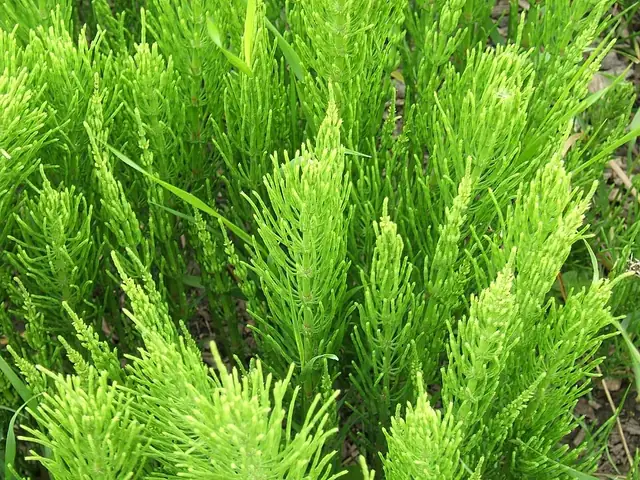
Do not confuse with other horsetails, particularly Equisetum palustre.
An illustration is not enough to identify a plant for consumption. Do not forage for a species based solely on this profile.
Uses & evidence
UNDERSTANDING THE USES
Properties & uses.
Urinary elimination
Traditional adjunctive use to increase urine volume in minor complaints.
Use considered plausible in a traditional-use monograph. That status alone does not demonstrate clinical efficacy.
Read the sourceMinor wounds
Traditional external use of suitable preparations.
Use considered plausible in a traditional-use monograph. That status alone does not demonstrate clinical efficacy.
Read the sourceThe traditional uses described are not clinical proof of effectiveness. Evidence for one preparation cannot automatically be applied to another.
Precautions before use
BEFORE ANY USE
Precautions & contraindications.
This guidance does not cover every individual situation. Missing information is not a guarantee of safety.
Contraindications & precautions
- Source-listed contraindicationAllergy to the substance or preparation.Source
- Source-listed contraindicationUrinary use is contraindicated when fluid restriction is prescribed, including severe cardiac or renal disease.Source
- PrecautionFever, painful urination, spasms or blood in the urine require medical advice. The herb alone is not a treatment for urinary infection.Source
Medicine interactions
- No interaction reported in the sourceNo interactions reported in the consulted source for the described preparations; this does not establish compatibility with every medicine.Source
“Reported” does not prove causality; “possible” may reflect indirect evidence. “None reported” means none in the cited source, not that all combinations have been studied. Do not stop a prescribed treatment based on this profile.
Adverse effects
- Allergies and mild digestive complaints reported.
Pregnancy & breastfeeding
Oral use: not recommended during pregnancy/breastfeeding because data are insufficient. External use: not recommended during pregnancy; do not apply to the breast when breastfeeding.
SourceChildren & adolescents
Medicinal use is not recommended below 12 years because data are insufficient; adult preparations and doses cannot be extrapolated.
SourceIf symptoms persist, worsen or are unusual, consult a healthcare professional. In an emergency, contact the emergency services.
Forms & how they are used
DOCUMENTED FORMS
One plant, several preparations.
Only forms documented in this profile’s sources are presented.
InfusionAerial parts · Route: oral
Fragmented plant material.
Please note: Check the preparation and its leaflet; concentrations are not interchangeable.
Read the sourceExternal preparationAerial parts · Route: topical
Infusion or decoction intended for minor wounds.
Please note: Have a deep or infected wound assessed.
Read the sourcePreparations: ingredients & steps
DOCUMENTED PREPARATIONS
Preparations & recipes.
A DOCUMENTED PREPARATION
Horsetail decoction
Traditional support for minor urinary discomfort. Traditional-use guidance; sufficient clinical evidence for a benefit from this tea is lacking.
Plant part: Sterile aerial parts
Ingredients & quantities
- 1–4 g — dried, comminuted sterile aerial parts (Equisetum arvense L.)
- 150 ml water
Preparation steps
- Weigh 1–4 g of the specified dried, comminuted part from a supplier who verifies the species.
- Place the herb with 150 ml of water in a small saucepan.
- Bring to the boil and simmer gently for 5–15 minutes, then strain.
- Allow to cool before drinking. Do not substitute an extract or essential oil.
Use: One cup 3–4 times daily, without exceeding 12 g herb daily; ask a pharmacist to set the amount per cup. Seek advice if symptoms exceed one week or worsen.
Storage: Prepare a cup just before use and drink once cooled. No storage period for the prepared infusion is established here; do not keep it for the following day.
Before you start. Adults aged 18 and over. Do not use if allergic to the plant. Not recommended during pregnancy or breastfeeding because sufficient safety data are lacking. Do not use when fluid restriction has been prescribed, particularly with severe heart or kidney disease. Maintain an appropriate fluid intake; do not force fluids. This tea does not treat a urinary infection. Fever, flank pain, painful urination, blood in the urine or worsening symptoms require prompt medical assessment. Use verified Equisetum arvense only: confusion with E. palustre is dangerous. Digestive and allergic reactions may occur; facial swelling requires stopping and urgent medical advice. No reported interaction in the monograph does not mean no risk; ask a pharmacist to check your medicines.
A DOCUMENTED PREPARATION
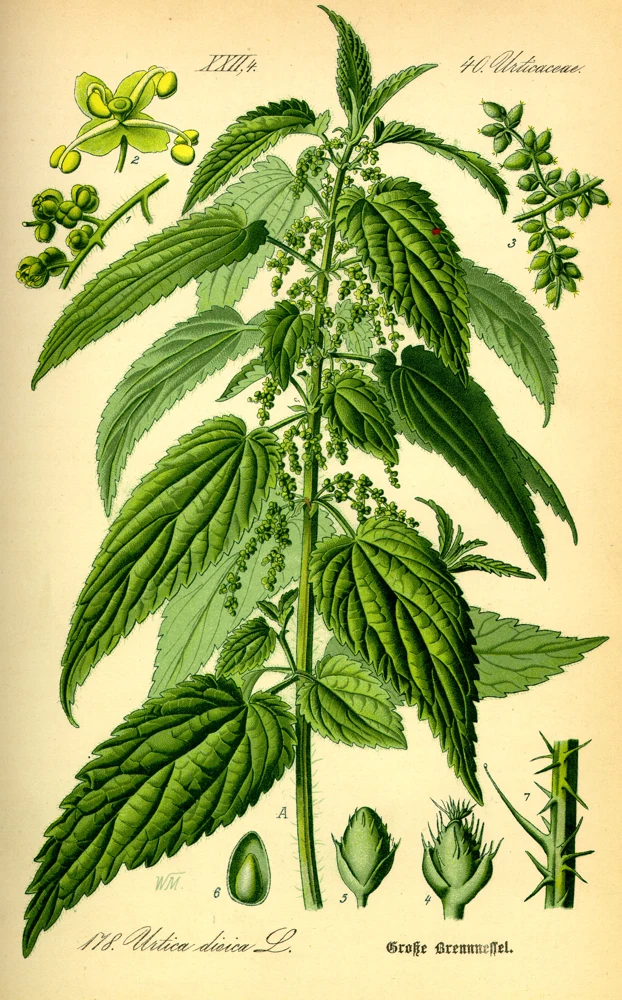
Horsetail, nettle & restharrow blend
Traditional support for minor urinary discomfort. Preparation instructions for a documented medicinal formula; registration rests on longstanding use, not demonstrated clinical efficacy.
Keep the exact formula, plant parts and preparation stated below. Some blends require a specified ready-made product or professional preparation. Do not create your own substitutions.
Plant part: 0.715 g horsetail sterile aerial parts; 0.26 g nettle leaves; 0.195 g restharrow root. Peppermint leaves as an excipient.
Ingredients & quantities
- 1 pre-dosed 1.3 g teabag of DR. KOTTAS Nieren-Blasentee, exactly matching the cited SmPC
- 0.715 g horsetail sterile aerial parts; 0.26 g nettle leaves; 0.195 g restharrow root. Peppermint leaves as an excipient.
- 125 ml boiling water
Preparation steps
- Ask a pharmacist to confirm that the formula and leaflet exactly match the cited preparation. The amounts above are not instructions to recreate the blend at home.
- Pour 125 ml boiling water over one teabag.
- Cover and steep for 10 minutes.
- Gently squeeze and remove the bag, and drink lukewarm in small sips.
Use: Adults: one cup 3–4 times daily. Seek advice if there is no improvement within seven days or sooner if symptoms worsen. Do not combine several medicinal teas for the same purpose without a pharmacist’s advice.
Storage: Prepare one cup at a time. No storage period is documented for the drink: do not keep it until the next day. Store teabags as instructed on their packaging and respect the expiry date.
Before you start. Adults aged 18 and over. Avoid during pregnancy and breastfeeding because sufficient data are lacking. Contraindicated with allergy to the ingredients, menthol or peppermint. Do not use when fluid restriction has been prescribed, particularly with severe heart or kidney disease. Maintain an appropriate fluid intake; do not force fluids. This tea does not treat a urinary infection. Fever, flank pain, painful urination, blood in the urine or worsening symptoms require prompt medical assessment. Digestive and allergic reactions may occur. Avoid with gastro-oesophageal reflux; seek advice with gallstones or other biliary disease because of the peppermint. Interactions of the blend have not been studied; have all medicines checked. Concentrations are not interchangeable.
Properties, interactions & contraindications
Read before using this blend.
Do not stop or change a prescribed treatment. Show the exact ingredients and quantities to your pharmacist, including any other herbal products you take.
This review combines the exact formula’s source with ingredient-specific references. It does not establish synergy, assess every medicine, or guarantee that the mixture is suitable for you. “None reported” means no reports in the cited source, not proven compatibility.
Additional review needed: Nettle LEAF: the HERBA aerial-part review does not transfer. The blend’s leaflet and warnings remain essential.
Field horsetailEquisetum arvense L. · Equisetum arvense herb
Preparations covered by this ingredient review: infusion, decoction. These forms cannot be substituted for one another.
Read the plant’s current safety profileDocumented uses and limits
- Traditional use to increase urine output as an adjunct for minor urinary complaints. It is not a stand-alone treatment for infection.↗
- EMA traditional use for this part and preparation. This does not establish the efficacy or safety of a new blend.↗
What is known about its action
- A small, limited-quality dry-extract trial does not validate an infusion or blend. Avoid detoxification or kidney-treatment promises.↗
Contraindications
- Plant allergy; conditions requiring reduced fluid intake, including severe heart or kidney disease.↗
Medicines and interactions
- No interaction reported in this sourceNo interactions reported in the EMA monograph reviewed.↗
Precautions and adverse effects
- Seek medical advice for worsening symptoms, fever, painful urination, spasms or blood in urine. Do not delay evaluation of an infection with a tea.↗
- Strict species identification; extract studies do not establish efficacy of the infused blend.↗
- Mild gastrointestinal complaints; allergy including rash or facial swelling. Frequency unknown.↗
Pregnancy, breastfeeding and children
Spiny restharrowOnonis spinosa L. · Ononis spinosa root
Preparations covered by this ingredient review: infusion. These forms cannot be substituted for one another.
Read the plant’s current safety profileDocumented uses and limits
- Traditional use to increase urine output as an adjunct for minor urinary complaints. It is not a stand-alone treatment for infection.↗
- EMA traditional use for this part and preparation. This does not establish the efficacy or safety of a new blend.↗
What is known about its action
- The final report lacks relevant clinical research establishing root effects; the urinary indication rests on tradition.↗
Contraindications
- Plant allergy; conditions requiring reduced fluid intake, including severe heart or kidney disease.↗
Medicines and interactions
- No interaction reported in this sourceNo interactions reported in the EMA monograph reviewed.↗
Precautions and adverse effects
- Seek medical advice for worsening symptoms, fever, painful urination, spasms or blood in urine. Do not delay evaluation of an infection with a tea.↗
- 2014 final version; revision 1 visible on EMA remains labelled draft. A draft is not treated as adopted.↗
- No adverse effects known in the monograph; this is not a guarantee of no risk.↗
Pregnancy, breastfeeding and children
PeppermintMentha × piperita L. · Leaf
Preparations covered by this ingredient review: infusion. These forms cannot be substituted for one another.
Read the plant’s current safety profileDocumented uses and limits
- Mild digestive discomfort, including indigestion and flatulence.↗
What is known about its action
- Oil and menthol experimentally affect digestive smooth muscle and calcium movement. Trials of enteric-coated oil capsules do not establish leaf-tea efficacy.↗
Contraindications
- Allergy to peppermint or menthol.↗
Medicines and interactions
- No interaction reported in this sourceNo interaction reported in the monograph; this does not establish compatibility with every medicine.↗
Precautions and adverse effects
- Avoid in reflux: heartburn may worsen. Caution with gallstones or biliary disease.↗
- Worsening reflux or heartburn; frequency unknown.↗
Pregnancy, breastfeeding and children
Documentary review: 2026-10-09
Understanding the plant’s actions
EXPLORE THE EVIDENCE
How does the plant act?
Field horsetail has a traditional urinary use and an external use for small wounds. A human trial measured the diuretic effect of a dry extract, but it involved healthy men over a short period. Increasing urine output does not demonstrate the elimination of “toxins” or treatment of an infection, cardiac edema or kidney disease.
Constituents to know.
Their presence and quantity depend on the plant part and preparation.
- Flavonoids and hydroxycinnamic acids
- These groups have been studied in the metabolism of an extract. The report does not allow them to be presented as the sole explanation for the urinary effect.Read the reference
Fluid balance
In a short trial, the extract altered fluid balance compared with placebo. This physiological outcome differs from a benefit in a disease.
A human study may be positive, negative or inconclusive. Read the findings, preparation and limitations.
Read the referenceMinor wounds
External use remains a separate traditional use; the oral diuretic trial does not validate it.
Use considered plausible in a traditional-use monograph. That status alone does not demonstrate clinical efficacy.
Read the referenceWhat this means for preparation.
Identifying Equisetum arvense and the form used is essential. An herbal tea is not automatically comparable to the dry extract used in the trial.
Studies, findings & limitations
THE RESEARCH
What the research shows.
A laboratory or animal result alone does not demonstrate a benefit in humans. Each result must be read alongside the preparation studied and its limitations.
Small diuresis trial
A human study may be positive, negative or inconclusive. Read the findings, preparation and limitations.
- Type of research
- Randomised double-blind trial, 36 healthy male volunteers, four-day phases.
- Preparation concerned
- Dry extract compared with placebo and hydrochlorothiazide.
- Observed results
- A diuretic effect was observed, with no difference detected between the two active treatments in this small trial.
- Limitations to consider
- This demonstrates neither therapeutic equivalence with the medicine nor safety during prolonged use or in people with illness.
What can we take from this?
This profile does not infer a bone or remineralizing benefit from urinary properties. Use intended to increase urine output is incompatible with certain fluid restrictions.
Documentary review dated 09/10/2026. The references remain available to check the context.
Sources & last review
CHECKING REFERENCES
Sources for this profile.
- EMA — Equiseti herba: official dossierAccessed on 09/10/2026
- ANSES — precautions for plants in food supplements, June 2023 summaryAccessed on 09/10/2026
- EMA — Equisetum arvense L.: assessment report, traditional preparationAccessed on 09/10/2026
- EMA — monographie finale, indication et sections 4.3 à 4.8 reluesAccessed on 09/10/2026
- BASG, Austrian medicines authority — SmPC DR. KOTTAS Nieren-Blasentee, HERB-00073Accessed on 09/10/2026
- EMA — Mentha × piperita L.: component precautionsAccessed on 09/10/2026
Image: MPF · CC BY-SA 3.0. View the original image and its licence. Image resized and converted to WebP.