Identity & origin
BOTANICAL IDENTITY
The right name is the first step.
This profile concerns the root. The uses described depend on the preparation.
Also known as: Ginseng, Korean ginseng
Panax ginseng refers neither to eleuthero nor to all other Panax species.
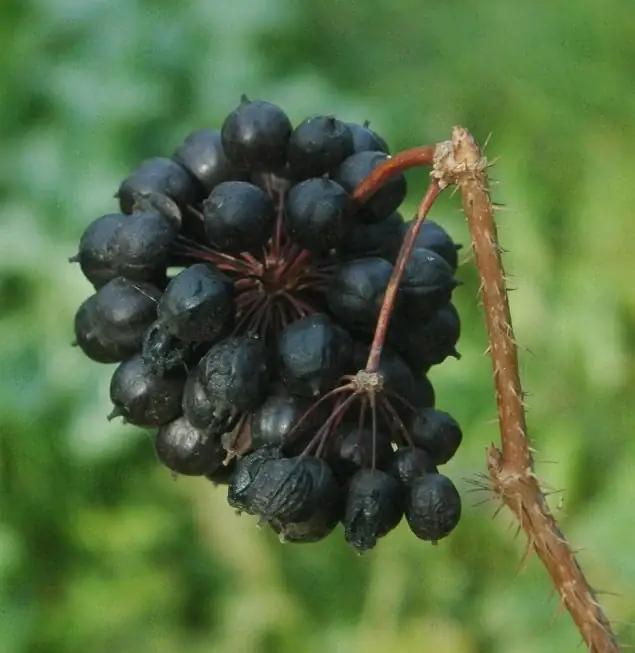
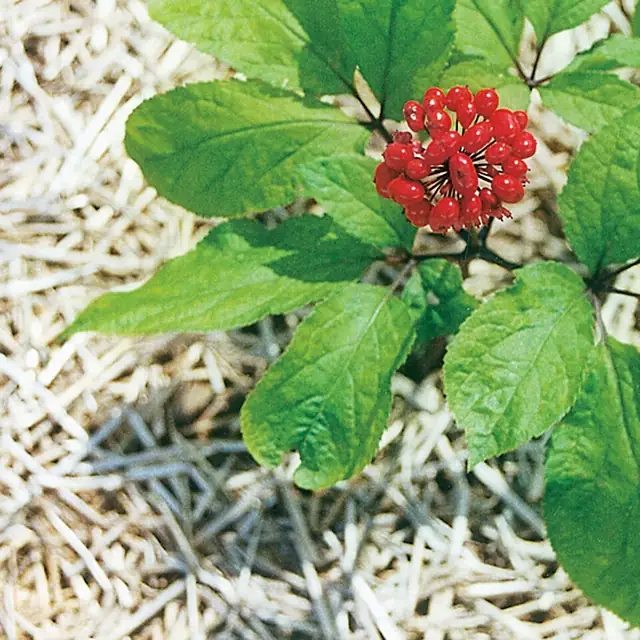
An illustration is not enough to identify a plant for consumption. Do not forage for a species based solely on this profile.
Uses & evidence
UNDERSTANDING THE USES
Properties & uses.
Temporary fatigue
Traditional use for fatigue and weakness; does not replace investigation of persistent fatigue.
Use considered plausible in a traditional-use monograph. That status alone does not demonstrate clinical efficacy.
Read the sourceThe traditional uses described are not clinical proof of effectiveness. Evidence for one preparation cannot automatically be applied to another.
Precautions before use
BEFORE ANY USE
Precautions & contraindications.
This guidance does not cover every individual situation. Missing information is not a guarantee of safety.
Contraindications & precautions
- Source-listed contraindicationAllergy to the plant or preparation: contraindication.Source
- PrecautionDiabetes, autoimmune disease or a clotting disorder require prior medical advice; effects on glucose and clotting are possible.Source
Medicine interactions
- No interaction reported in the sourceNo interactions are reported in the source for the assessed preparations. Evidence is limited; compatibility with medicines is not guaranteed.Source
- Possible interactionNCCIH notes possible glucose lowering and effects on clotting. Monitoring may be needed with diabetes or antithrombotic medicines; the interaction magnitude is not established for every product.Source
“Reported” does not prove causality; “possible” may reflect indirect evidence. “None reported” means none in the cited source, not that all combinations have been studied. Do not stop a prescribed treatment based on this profile.
Adverse effects
- Insomnia, digestive symptoms and allergic reactions reported; frequency unknown.
Pregnancy & breastfeeding
Medicinal use is not recommended during pregnancy or breastfeeding because evidence is insufficient; missing evidence establishes neither harm nor safety.
SourceChildren & adolescents
Medicinal use is not recommended below age 18 because evidence is insufficient; do not scale down an adult dose.
SourceIf symptoms persist, worsen or are unusual, consult a healthcare professional. In an emergency, contact the emergency services.
Forms & how they are used
DOCUMENTED FORMS
One plant, several preparations.
Only forms documented in this profile’s sources are presented.
Herbal tea or powderRoot · Route: oral
Comminuted or powdered dried root.
Please note: Follow the product's package leaflet; preparations are not interchangeable.
Read the sourceExtractRoot · Route: oral
Documented liquid, soft or dry extracts.
Please note: Follow the product's package leaflet; preparations are not interchangeable.
Read the sourceUnderstanding the plant’s actions
EXPLORE THE EVIDENCE
How does the plant act?
Asian ginseng is documented through its root, with a traditional use for symptoms of fatigue and weakness. Human studies exist, but they do not establish a general improvement in all types of performance. Trials differ in preparation, population and duration; many are small and short. The terms white ginseng and red ginseng describe preparation processes, not two equivalent bodies of evidence for efficacy.
Constituents to know.
Their presence and quantity depend on the plant part and preparation.
- Ginsenosides
- Also called panaxosides, these constituents are characteristic of Asian ginseng. Preparation processes and extracts make it necessary to identify the product studied.Read the reference
Fatigue and weakness
The root has a traditional use for relieving these symptoms. Lasting fatigue requires investigation of its cause.
Use considered plausible in a traditional-use monograph. That status alone does not demonstrate clinical efficacy.
Read the referenceGeneral fatigue studied in humans
Some data suggest a small benefit, but results are not uniform. This signal does not prove a universal effect on energy.
A human study may be positive, negative or inconclusive. Read the findings, preparation and limitations.
Read the referenceWhat this means for preparation.
Look for Panax ginseng, the root and the exact preparation. Products called ginseng that contain another species do not automatically share the same evidence.
Studies, findings & limitations
THE RESEARCH
What the research shows.
A laboratory or animal result alone does not demonstrate a benefit in humans. Each result must be read alongside the preparation studied and its limitations.
A modest signal in heterogeneous literature
A human study may be positive, negative or inconclusive. Read the findings, preparation and limitations.
- Type of research
- NCCIH summary citing a 2023 review including 19 studies and 2,413 participants.
- Preparation concerned
- Asian ginseng preparations studied for fatigue; formulas combining several plants must be distinguished.
- Observed results
- A small benefit for general fatigue is possible, with conflicting results across studies.
- Limitations to consider
- Studies are often small and short. Results on mixtures do not allow the effect of ginseng to be isolated.
What can we take from this?
Blood glucose results remain contradictory; improved sports performance is generally not shown. Neither this research nor tradition allows replacement of diabetes treatment or masking of unexplained fatigue.
Documentary review dated 09/10/2026. The references remain available to check the context.
Sources & last review
CHECKING REFERENCES
Sources for this profile.
- EMA — Ginseng radix: assessment and documentsAccessed on 09/10/2026
- ANSES — summary of precautions for food supplements (June 2023)Accessed on 09/10/2026
- NCCIH — Asian Ginseng: research and safetyAccessed on 09/10/2026
- EMA — document relu pour usages et sécurité : final european union herbal monograph panax ginseng camey radix revision 1Accessed on 09/10/2026
Image: FloraFarm GmbH / Katharina Lohrie · CC BY 3.0. View the original image and its licence. Image resized and converted to WebP.