Identity & origin
BOTANICAL IDENTITY
The right name is the first step.
Kola contains caffeine; its precautions differ from those of a stimulant-free herbal tea.
Also known as: kola nut
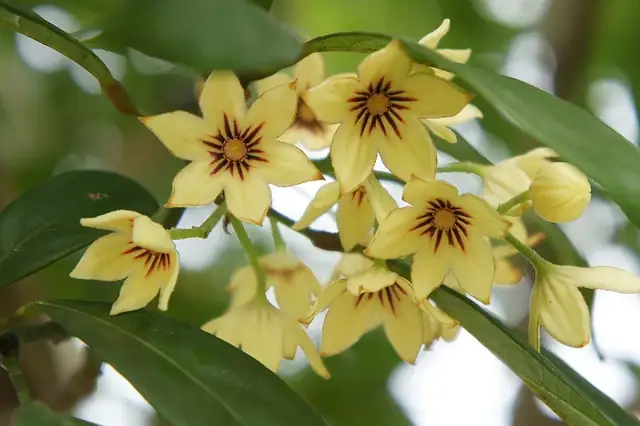
The botanical name, part and preparation must match. A photograph is not enough for identification intended for consumption.
An illustration is not enough to identify a plant for consumption. Do not forage for a species based solely on this profile.
Uses & evidence
UNDERSTANDING THE USES
Properties & uses.
Fatigue and weakness
Documented traditional stimulant use; persistent fatigue requires assessment.
Use considered plausible in a traditional-use monograph. That status alone does not demonstrate clinical efficacy.
Read the sourceThe traditional uses described are not clinical proof of effectiveness. Evidence for one preparation cannot automatically be applied to another.
Precautions before use
BEFORE ANY USE
Precautions & contraindications.
This guidance does not cover every individual situation. Missing information is not a guarantee of safety.
Contraindications & precautions
- Insufficient dataNot reassessed: final monograph inaccessible. Existing restrictions remain; compatibility and safety are not established.
Medicine interactions
- Insufficient dataNot reassessed: final monograph inaccessible. Existing restrictions remain; compatibility and safety are not established.
Other retained warnings · review incomplete
These existing warnings remain relevant to consult. Their exhaustive reassessment is outside this targeted review.
Restrictions and precautions
- Peptic ulcer, hypertension, arrhythmia, hyperthyroidism or allergy.
Medicine interactions
- Caution with MAOIs; may counteract sedatives and increase the effects of sympathomimetics.
Pregnancy, breastfeeding and children
Pregnancy and breastfeeding: not recommended because of a lack of data.
Not recommended under 18 years.
“Reported” does not prove causality; “possible” may reflect indirect evidence. “None reported” means none in the cited source, not that all combinations have been studied. Do not stop a prescribed treatment based on this profile.
Adverse effects
- May disturb sleep.
Pregnancy & breastfeeding
Not reassessed: final monograph inaccessible. Existing restrictions remain; compatibility and safety are not established.
Children & adolescents
Not reassessed: final monograph inaccessible. Existing restrictions remain; compatibility and safety are not established.
If symptoms persist, worsen or are unusual, consult a healthcare professional. In an emergency, contact the emergency services.
Forms & how they are used
DOCUMENTED FORMS
One plant, several preparations.
Only forms documented in this profile’s sources are presented.
Seed preparationSeeds · Route: oral
Identified medicinal product with a leaflet.
Please note: Add up other sources of caffeine; avoid before bedtime.
Read the sourceUnderstanding the plant’s actions
EXPLORE THE EVIDENCE
How does the plant act?
Kola seeds are traditionally used for fatigue and weakness. Their caffeine links the desired stimulant effect to precautions concerning sleep, heart rhythm and combinations with medicines. The EMA dossier covers Cola nitida, its varieties and Cola acuminata; it does not separately demonstrate efficacy specific to C. nitida. A cola-flavored beverage is not a medicinal seed preparation.
Constituents to know.
Their presence and quantity depend on the plant part and preparation.
- Caffeine
- The report examines interactions related to this substance. Its plant origin does not remove the need to consider coffee, tea, energy drinks and caffeine-containing medicines.Read the reference
Stimulation
Traditional use targets temporary fatigue. Feeling awake amounts neither to catching up on sleep nor to treating the cause of exhaustion.
Use considered plausible in a traditional-use monograph. That status alone does not demonstrate clinical efficacy.
Read the referenceAdverse effects related to combinations
The effects of other stimulants may be additive; the report describes possible interactions with several classes of medicines. Their relevance depends on the product and exposure.
This entry describes a risk or interaction, not a beneficial property.
Read the referenceWhat this means for preparation.
Adding up caffeine sources and having treatments checked provides practical guidance. The amount of kola powder alone does not fully indicate exposure.
Studies, findings & limitations
THE RESEARCH
What the research shows.
A laboratory or animal result alone does not demonstrate a benefit in humans. Each result must be read alongside the preparation studied and its limitations.
What caffeine data show
The references do not establish a benefit. Lack of evidence is not assurance of safety.
- Type of research
- EMA safety assessment, including observational consumption studies.
- Preparation concerned
- Caffeine from various sources; indirect data for a particular kola preparation.
- Observed results
- These data support caution during pregnancy and with certain treatments.
- Limitations to consider
- A statistical association concerning total caffeine does not quantify the risk of an individual species or preparation.
What can we take from this?
No general restorative property, enhanced immunity or assured sporting performance is established here. Persistent fatigue should be assessed rather than offset with more stimulant.
Documentary review dated 09/10/2026. The references remain available to check the context.
Sources & last review
CHECKING REFERENCES
Sources for this profile.
- EMA — Colae semen: official dossierAccessed on 09/10/2026
- EMA — monograph or public statement on Cola nitidaAccessed on 09/10/2026
- EMA — assessment report on Cola nitida (Vent.) Schott et Endl. (seeds)Accessed on 09/10/2026
Image: Michael Hermann · CC BY-SA 3.0. View the original image and its licence. Image resized and converted to WebP.