Identity & origin
BOTANICAL IDENTITY
The right name is the first step.
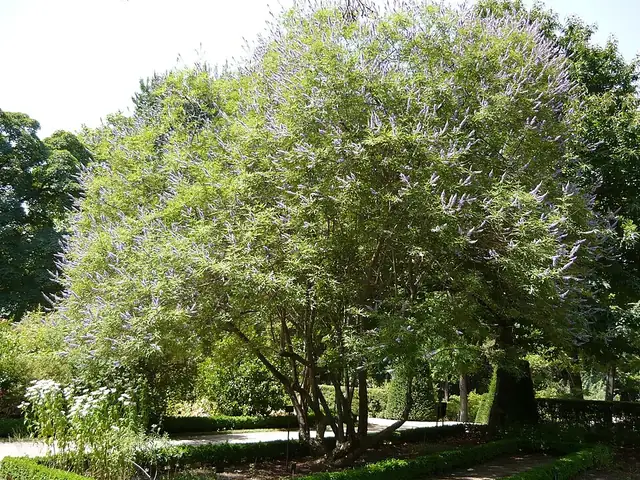
Chaste tree: guidance on the fruit, with uses and precautions specific to the documented preparations.
Also known as: chaste tree
The botanical name and part used must match the profile; a photograph alone is not sufficient grounds for consuming a plant.
An illustration is not enough to identify a plant for consumption. Do not forage for a species based solely on this profile.
Uses & evidence
UNDERSTANDING THE USES
Properties & uses.
Premenstrual syndrome
Well-established premenstrual-syndrome use is limited to dry extract DER 6–12:1, ethanol 60% w/w. Other preparations have non-equivalent traditional use.
EMA status applies only to the described preparation and indication, not every form of the plant.
Read the sourceThe traditional uses described are not clinical proof of effectiveness. Evidence for one preparation cannot automatically be applied to another.
Precautions before use
BEFORE ANY USE
Precautions & contraindications.
This guidance does not cover every individual situation. Missing information is not a guarantee of safety.
Contraindications & precautions
- Source-listed contraindicationKnown allergy to the preparation.Source
- PrecautionPituitary history or oestrogen-sensitive cancer: medical review; may mask prolactin-secreting tumour symptoms.Source
- PrecautionSupplements: qualified advice is required with hormone-dependent cancer, a personal or family history of such cancer, a prolactin-secreting tumour or a pituitary history.Source
Medicine interactions
- Possible interactionInteractions cannot be excluded with dopamine agonists/antagonists, oestrogens and anti-oestrogens; mechanistic concern, not established clinical interactions.Source
“Reported” does not prove causality; “possible” may reflect indirect evidence. “None reported” means none in the cited source, not that all combinations have been studied. Do not stop a prescribed treatment based on this profile.
Adverse effects
- Allergies, sometimes severe, acne, rash, headache, dizziness, digestive or menstrual problems.
Pregnancy & breastfeeding
ANSES contraindicates food supplements during pregnancy (missing data) and breastfeeding (experimental toxicological findings). EMA advises against these uses.
SourceChildren & adolescents
No prepubertal indication; not recommended below 18 owing to insufficient data.
SourceIf symptoms persist, worsen or are unusual, consult a healthcare professional. In an emergency, contact the emergency services.
Forms & how they are used
DOCUMENTED FORMS
One plant, several preparations.
Only forms documented in this profile’s sources are presented.
Dry extractFruit · Route: oral
Powder or liquid extractFruit · Route: oral
Understanding the plant’s actions
EXPLORE THE EVIDENCE
How does the plant act?
Chaste tree fruit has been studied for premenstrual syndrome, a set of cyclical symptoms preceding menstruation. The strongest data concern a specific dry extract, rather than every Vitex agnus-castus preparation. Hypotheses involving dopamine and prolactin explain certain precautions, but do not allow the plant to be presented as a universal “hormone regulator”. Other preparations mainly fall under traditional use for minor symptoms.
Dopaminergic pathways
Experimental results suggest an action on dopamine receptors and prolactin secretion. A reduction in this hormone in all female users has not been demonstrated.
Laboratory or animal observation. A human benefit cannot be inferred from this finding alone.
Read the referencePremenstrual symptoms
The dry extract DER 6–12:1, ethanol 60% w/w, has human results supporting this precise indication.
A human study may be positive, negative or inconclusive. Read the findings, preparation and limitations.
Read the referenceWhat this means for preparation.
Dopaminergic or hormonal treatments and certain pituitary disorders must be reported before use. A prolactin-secreting tumour may require specific investigation; masking a symptom does not treat its cause.
Studies, findings & limitations
THE RESEARCH
What the research shows.
A laboratory or animal result alone does not demonstrate a benefit in humans. Each result must be read alongside the preparation studied and its limitations.
An extract studied over several cycles
A human study may be positive, negative or inconclusive. Read the findings, preparation and limitations.
- Type of research
- Multicenter randomized, double-blind, placebo-controlled trial, 162 women, three menstrual cycles, reported by EMA.
- Preparation concerned
- Ze 440 fruit extract characterized by its manufacturing process.
- Observed results
- Symptom improvement was observed for certain conditions tested; increasing exposure further did not necessarily improve the result.
- Limitations to consider
- The conclusions concern this extract and this syndrome, not infertility, menopause or all menstrual disorders.
What can we take from this?
No single active ingredient is established by the data summarized here. A hormone blood test, menstrual irregularity or plans for pregnancy should not lead to extrapolation from premenstrual syndrome trials.
Documentary review dated 09/10/2026. The references remain available to check the context.
Sources & last review
CHECKING REFERENCES
Sources for this profile.
- EMA — Agni casti fructus: dossier and documentsAccessed on 09/10/2026
- ANSES — precautions for herbal supplements, June 2023 tableAccessed on 09/10/2026
- EMA — scientific assessment report: Vitex agnus-castusAccessed on 09/10/2026
- EMA — réévaluation documentaire de la préparationAccessed on 09/10/2026
Image: Cillas · CC BY-SA 4.0. View the original image and its licence. Image resized and converted to WebP.