BOTANICAL IDENTITY
The right name is the first step.
Also known as: yarrow, yarrow
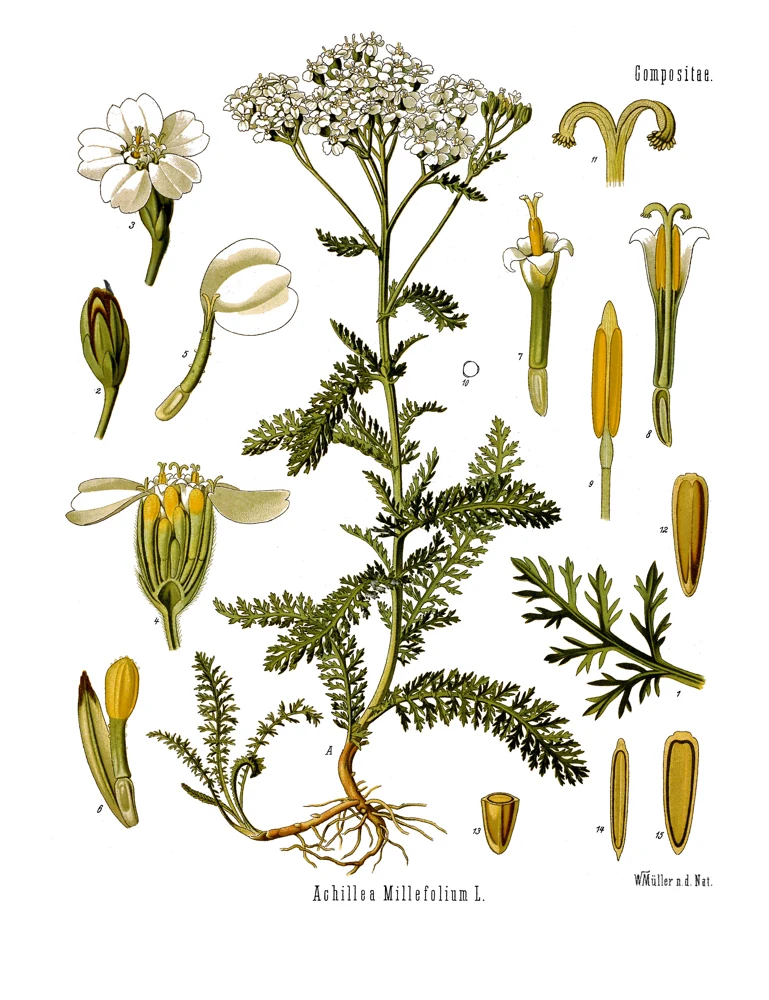
Do not identify harvested plants solely by the resemblance of their flowers or a photograph; have the species checked by a knowledgeable person.
An illustration is not enough to identify a plant for consumption. Do not forage for a species based solely on this profile.
01 · UNDERSTAND
Properties & uses.
Digestive comfort
Traditional use for mild spasmodic digestive complaints, bloating and flatulence.
Read the sourceMenstrual comfort
Traditional use for minor menstrual cramps. Clinical evidence is insufficient; this is not a treatment for endometriosis.
Read the sourceThe traditional uses described are not clinical proof of effectiveness. Evidence for one preparation cannot automatically be applied to another.
02 · UNDERSTAND THE ACTION
How does the plant act?
Yarrow flowering tops have several traditional uses: temporary loss of appetite, mild digestive spasms, minor menstrual spasms and small superficial wounds. The mechanisms explored particularly involve smooth muscle contraction and inflammatory processes. A human trial on menstrual pain exists, but it used flowers in infusion bags: it does not demonstrate the equivalence of every aerial-part preparation, a tincture or an essential oil.
Constituents to know.
Their presence and quantity depend on the plant part and preparation.
- Flavonoids and phenolic acids
- Apigenin, luteolin and dicaffeoylquinic acids are among the constituents studied. Levels vary considerably with the plant material; the presence of a molecule's name does not define an effective dose.Read the reference
- Sesquiterpene lactones and aromatic fraction
- Yarrow contains lactones, including proazulenes depending on the plant profile. Aromatic compositions vary. This diversity prevents an experiment on one extract from being generalized to all products sold under the same name.Read the reference
Mild digestive spasms and bloating
Traditional use concerns minor spasmodic digestive problems, particularly with gas and distension. Experimental observations on intestinal muscle provide plausibility without establishing efficacy for all causes of abdominal pain.
Read the referenceTemporary loss of appetite
Traditional preparations are also used for a temporary decrease in appetite. The presence of bitter constituents contributes to the historical rationale; it does not demonstrate treatment of unexplained weight loss.
Read the referenceMinor menstrual cramps
The monograph recognizes traditional use for symptom relief. This indication is limited: it does not demonstrate hormonal regulation, treatment of endometriosis or an effect on fertility.
Read the referenceIntestinal muscle: a calcium-related avenue
A flavonoid fraction and certain flavonoids relax isolated guinea pig ileum. Reduced calcium entry into muscle cells has been proposed; this experimental mechanism does not measure relief after a cup of infusion.
Read the referenceWhat this means for preparation.
Check whether the product contains flowers alone or flowering aerial parts: this difference may explain a discrepancy between a study and traditional use. Yarrow can cause an Asteraceae allergy; minor wounds and unusual menstrual pain require different safety guidance.
03 · EXAMINE THE EVIDENCE
What the research shows.
A laboratory or animal result alone does not demonstrate a benefit in humans. Each result must be read alongside the preparation studied and its limitations.
Primary dysmenorrhoea: a clinical signal requiring confirmation
- Type of research
- Randomized double-blind placebo-controlled trial in female students; observation over two menstrual cycles.
- Preparation concerned
- Achillea millefolium in infusion bags; comparison with placebo bags.
- Observed results
- The reduction in pain assessed using a visual scale was greater in the yarrow group at both reported assessments.
- Limitations to consider
- A trial in a specific population is not enough to establish a generalizable benefit. The protocol does not become a recommended recipe; the results do not concern endometriosis or every preparation of the herb.
What the intestinal test actually shows
- Type of research
- 2006 experimental study on isolated guinea pig ileum segments, using a commercial sample of Achillea millefolium in the broad sense.
- Preparation concerned
- Flavonoid fraction, isolated compounds and some metabolites; comparison of their effects on contraction.
- Observed results
- Apigenin, luteolin and quercetin showed activity, whereas rutin and two metabolites tested had no significant effect in this experimental system.
- Limitations to consider
- The transformation of compounds in the body matters: the activity of a molecule applied to tissue is not necessarily the activity achieved after ingestion. The study does not specify a clinical benefit by subspecies.
Flowers or herb: clarification from the European dossier
- Type of research
- EMA addendum on the flowers, first review.
- Preparation concerned
- Achillea millefolium flowers in the trial by Jenabi and Fereidoony.
- Observed results
- The EMA states that the herbal form corresponds to its flower monograph, but that the studied dosage is substantially higher.
- Limitations to consider
- The quantity used in this trial does not become a recommendation. This difference limits transfer to usual traditional preparations and to the profile of the aerial parts.
What can we take from this?
The evidence does not support presenting yarrow as a plant that “balances hormones.” Results from isolated tissues remain preclinical. A plausible antispasmodic effect guarantees neither the efficacy of every preparation nor safety during pregnancy.
Documentary review dated 09/10/2026. The references remain available to check the context.
04 · CHOOSE A PREPARATION
One plant, several preparations.
Only forms documented in this profile’s sources are presented.
InfusionAerial parts · Route: oral
Preparation depends on whether the use is digestive or menstrual.
Please note: Quantities differ according to the use.
Read the sourceDry extractsAerial parts · Route: oral
Specific aqueous extracts documented for digestive or menstrual uses.
Please note: Do not generalize to all extracts.
Read the sourceTinctureAerial parts · Route: oral
Some hydroalcoholic forms concern digestive use.
Please note: Do not extrapolate their use to painful periods.
Read the source05 · BEFORE ANY USE
Precautions & contraindications.
This guidance does not cover every individual situation. Missing information is not a guarantee of safety.
Contraindications
- Allergy to yarrow or Asteraceae.
Medicine interactions
- No interactions reported in the monograph; this does not guarantee compatibility with all treatments.
Adverse effects
- Allergic skin reactions reported; frequency unknown.
Pregnancy & breastfeeding
Pregnancy and breastfeeding: medicinal use is not recommended because of insufficient data. Safety has not been established.
Children & adolescents
Under 12 years: use is not recommended due to lack of data.
If symptoms persist, worsen or are unusual, consult a healthcare professional. In an emergency, contact the emergency services.
06 · PUTTING KNOWLEDGE INTO PRACTICE
Preparations & recipes.
A DOCUMENTED PREPARATION
Yarrow infusion — mild digestive spasms
Traditional use for mild digestive spasms, bloating and flatulence. Laboratory findings do not demonstrate the clinical effectiveness of this tea.
Plant part: Dried flowering aerial parts
Ingredients & quantities
- 1.5–4 g dried, cut flowering aerial parts of Achillea millefolium L.
- 200 ml drinking water, brought to the boil
Preparation steps
- Check the botanical name and plant part on a product intended for herbal tea; weigh the stated quantity.
- Place the herb in a heatproof cup and pour over 200 ml boiling water.
- Steep for 5–15 minutes unless the product leaflet specifies otherwise. This is the general method in the EMA glossary; the plant monograph does not specify a particular steeping time.
- Strain, then let the infusion cool to a comfortable drinking temperature.
Use: The monograph specifies 1.5–4 g in 150–250 ml, 3 or 4 times daily between meals; 200 ml is a volume within that range. Seek advice if symptoms persist beyond 2 weeks, or sooner if they worsen.
Storage: Prepare immediately before use, as specified by the EMA glossary. The monograph does not document a household storage period; do not prepare a batch for later use.
Before you start. This guide restricts use to adults aged 18 and over. Not recommended during pregnancy or breastfeeding because safety data are insufficient. Contraindicated with allergy to yarrow or Asteraceae plants. Allergic skin reactions have been reported; stop if a rash or itching occurs and seek advice. Do not substitute essential oil for the herb. No interactions are reported in this monograph; this does not establish compatibility with medicines. Ask a pharmacist if you take medication.
A DOCUMENTED PREPARATION
Yarrow infusion — mild menstrual cramps
Traditional use for minor spasms associated with menstrual periods. This is not a treatment for endometriosis, substantial pain or abnormal bleeding. The quantity differs from the digestive reference.
Plant part: Dried flowering aerial parts
Ingredients & quantities
- 1–2 g dried cut flowering aerial parts of Achillea millefolium L.
- 250 ml boiling drinking water
Preparation steps
- Check the botanical name and plant part on a quality-controlled herbal tea; weigh the herb.
- Pour 250 ml boiling drinking water over the herb in a heatproof container.
- Steep for 5–15 minutes unless the product leaflet says otherwise. This is the EMA glossary’s general method; the monograph gives no preparation-specific time.
- Strain, then allow to cool to a comfortable temperature before drinking.
Use: EMA reference for this specific use: one preparation, 2–3 times daily. Seek advice if symptoms persist over one week; seek advice sooner for unusual, substantial or worsening pain. Do not combine digestive and menstrual dose schedules.
Storage: Prepare immediately before use, following the EMA glossary. The monograph provides no domestic storage period; do not prepare a stock batch.
Before you start. For adults aged 18+ in this collection. Not recommended during pregnancy or breastfeeding because sufficient safety data are lacking. Contraindicated with yarrow or Asteraceae allergy. Allergic skin reactions have been reported: stop if rash or itching occurs. Possible pregnancy or unusual bleeding needs assessment, not a herbal tea. No interactions are reported in this monograph; this does not establish compatibility with medicines. Ask a pharmacist if you take medication.
07 · CHECK THE SOURCES
Sources for this profile.
- EMA — Achillea millefolium L.: summary and documentsAccessed on 08/10/2026
- EMA — Achillea millefolium L., herba: monograph, preparation and precautionsAccessed on 09/10/2026
- Royal Botanic Gardens, Kew — botanical identityAccessed on 08/10/2026
- EMA — Assessment report on Achillea millefolium L., herba, Revision 1Accessed on 09/10/2026
- Lemmens-Gruber et al. (2006) — Investigation of the spasmolytic activity of the flavonoid fraction of Achillea millefolium s.l. on isolated guinea-pig ileaAccessed on 09/10/2026
- Jenabi and Fereidoony (2015) — Effect of Achillea Millefolium on Relief of Primary Dysmenorrhea: A Double-Blind Randomized Clinical TrialAccessed on 09/10/2026
- EMA — Addendum to Assessment report on Achillea millefolium L., flos — First reviewAccessed on 09/10/2026
- EMA — Glossary on herbal teas, section 4: general preparation methodAccessed on 09/10/2026
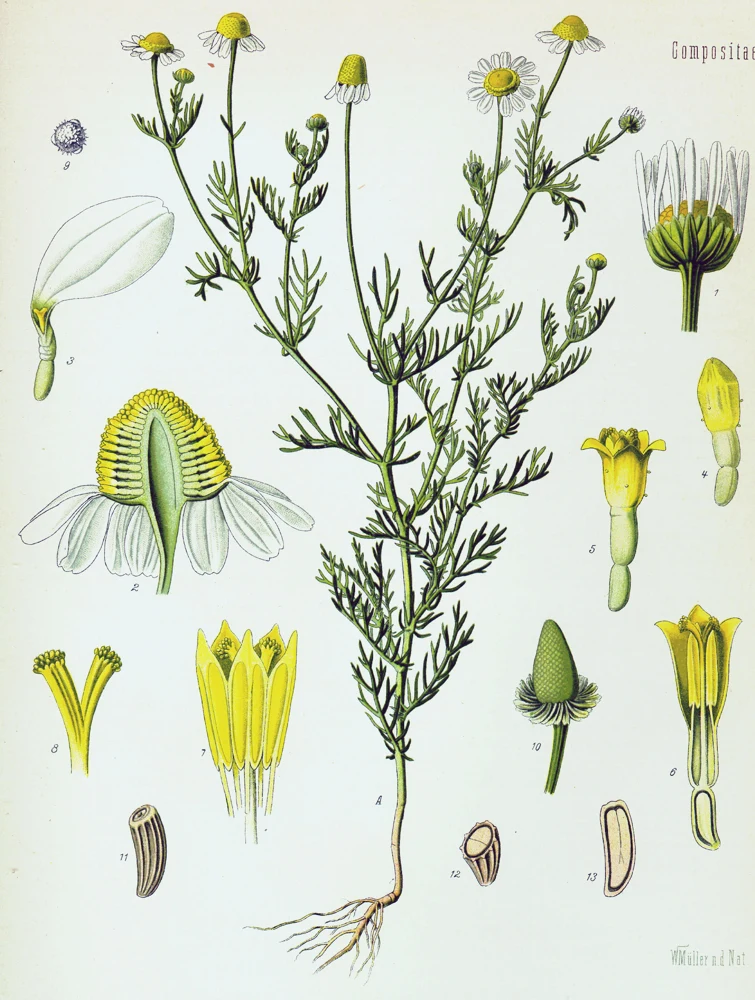
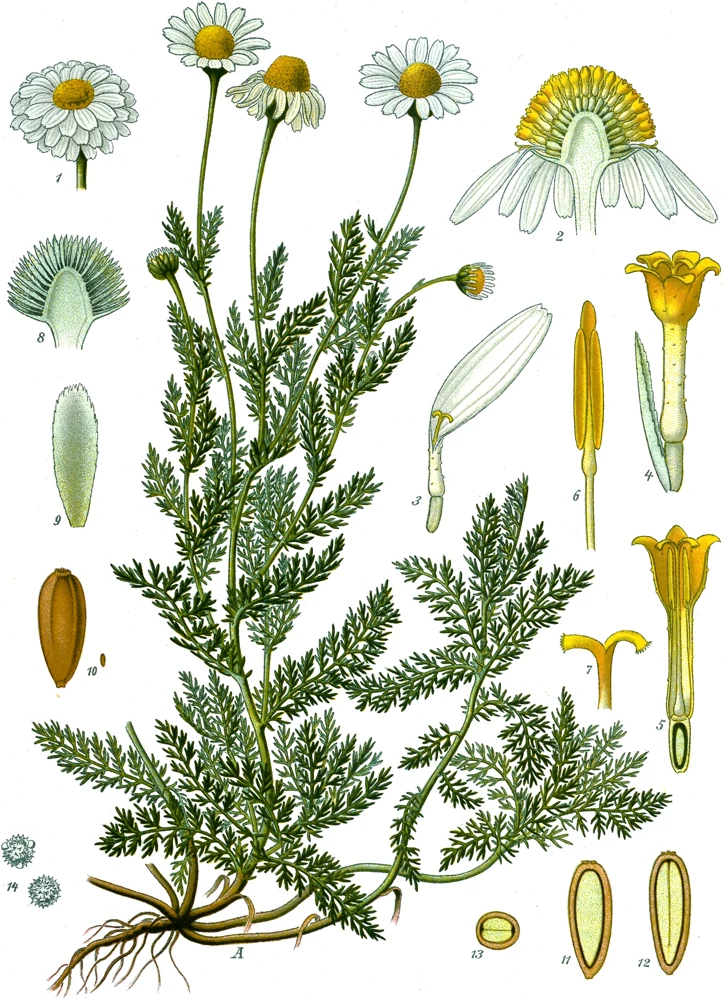
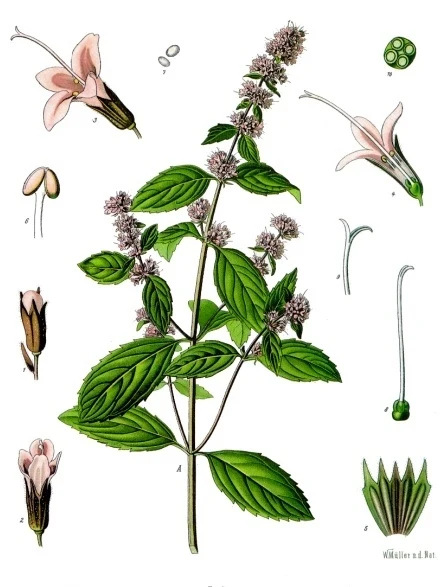
Illustration: Franz Eugen Köhler, Köhler’s Medizinal-Pflanzen · Public domain (Public Domain Mark 1.0). View the original image and its licence. Image resized and converted to WebP.
A TOUCH OF SOLÉA
Myriam’s tip
Myriam is reviewing the tip for this profile.
Myriam