BOTANICAL IDENTITY
The right name is the first step.
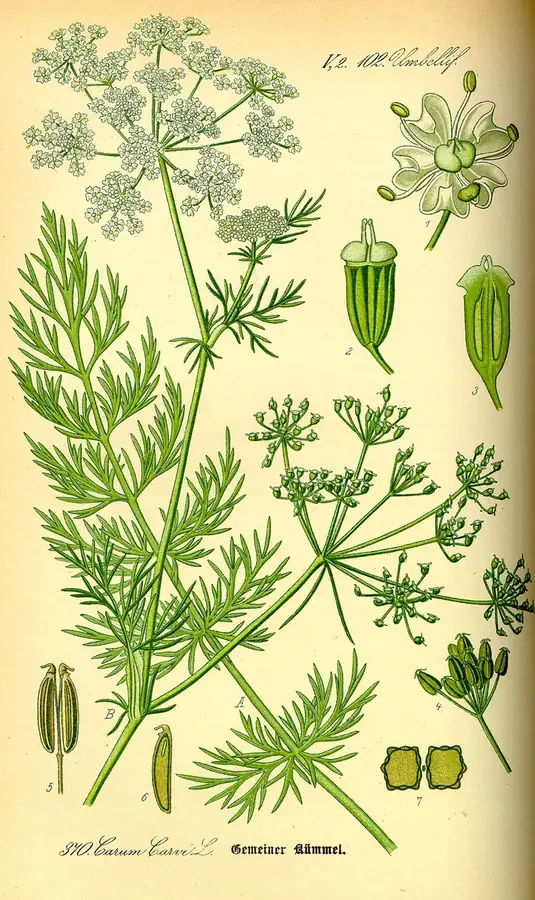
Also known as: caraway
Carum carvi is not Cuminum cyminum, the culinary cumin.
An illustration is not enough to identify a plant for consumption. Do not forage for a species based solely on this profile.
01 · UNDERSTAND
Properties & uses.
Bloating and gas
Traditional digestive use; clinical effectiveness has not been demonstrated for all preparations.
Read the sourceThe traditional uses described are not clinical proof of effectiveness. Evidence for one preparation cannot automatically be applied to another.
02 · UNDERSTAND THE ACTION
How does the plant act?
Caraway fruit, often called a seed, is traditionally used for bloating and gas. A frequent confusion is to attribute the results of an essential oil or digestive mixture directly to it. The European report covers both fruit and oil while distinguishing between them. This profile remains focused on the fruit and does not turn its aroma into a guarantee of efficacy.
Bloating and flatulence
The documented relief is based on tradition. This does not demonstrate that the fruit produces lasting changes in the microbiota or treats an intestinal disease.
Read the referenceBiliary action: avoid extrapolation
The report describes inhibition of gallbladder emptying with the oil in volunteers. This result concerns the oil and does not demonstrate an identical effect from a fruit herbal tea.
Read the referenceWhat this means for preparation.
First compare species and form: caraway, cumin and essential oil are not equivalent. Biliary precautions must be checked for the product concerned.
03 · EXAMINE THE EVIDENCE
What the research shows.
A laboratory or animal result alone does not demonstrate a benefit in humans. Each result must be read alongside the preparation studied and its limitations.
Shared dossier, distinct conclusions
- Type of research
- EMA assessment of Carum carvi fruits and oil.
- Preparation concerned
- Cut fruits on the one hand, essential oil on the other.
- Observed results
- The dossier does not support well-established use; digestive uses remain traditional.
- Limitations to consider
- A conclusion about the oil or a combination does not prove a benefit from the fruit preparation alone.
Spice allergy
- Type of research
- EMA addendum reporting a clinical case.
- Preparation concerned
- Dietary exposure to several spices, including caraway and coriander.
- Observed results
- A severe reaction led to investigation of sensitization to Apiaceae.
- Limitations to consider
- A case report does not measure frequency; it reinforces attention to known cross-allergies.
What can we take from this?
The fruit dossier does not support promises of an intestinal antibacterial effect or certain relief of spasms. No essential oil dosage is proposed.
Documentary review dated 09/10/2026. The references remain available to check the context.
04 · CHOOSE A PREPARATION
One plant, several preparations.
Only forms documented in this profile’s sources are presented.
InfusionFruits · Route: oral
05 · BEFORE ANY USE
Precautions & contraindications.
This guidance does not cover every individual situation. Missing information is not a guarantee of safety.
Contraindications
- Allergy to caraway, other Apiaceae, birch or mugwort.
- Supplements: have biliary/liver disorders or achlorhydria assessed.
Medicine interactions
- Interactions are not detailed here: have a pharmacist check treatments and the preparation.
Adverse effects
- No adverse effects reported in the EMA summary at the time of its assessment.
Pregnancy & breastfeeding
Medicinal use is not recommended during pregnancy and breastfeeding due to insufficient data.
Children & adolescents
Fruits: not recommended under 12 years.
If symptoms persist, worsen or are unusual, consult a healthcare professional. In an emergency, contact the emergency services.
06 · PUTTING KNOWLEDGE INTO PRACTICE
Preparations & recipes.
A DOCUMENTED PREPARATION
Caraway infusion — bloating
Traditional use for relief of bloating and flatulence. Adequate clinical trials have not established the effectiveness of this tea.
Plant part: Dried fruits
Ingredients & quantities
- 0.5–2 g dried Carum carvi L. fruits, whole or fragmented
- 150 ml drinking water, brought to the boil
Preparation steps
- Check the botanical name and plant part on a product intended for herbal tea; weigh the stated quantity.
- Place the herb in a heatproof cup and pour over 150 ml boiling water.
- Steep for 5–15 minutes unless the product leaflet specifies otherwise. This is the general method in the EMA glossary; the plant monograph does not specify a particular steeping time.
- Strain, then let the infusion cool to a comfortable drinking temperature.
Use: Monograph reference: one 150 ml preparation, 1–3 times daily. Seek advice if symptoms persist beyond 2 weeks, or sooner if they worsen. This reference does not replace the product leaflet.
Storage: Prepare immediately before use, as specified by the EMA glossary. The monograph does not document a household storage period; do not prepare a batch for later use.
Before you start. This guide restricts use to adults aged 18 and over. Not recommended during pregnancy or breastfeeding because safety data are insufficient. Contraindicated with allergy to caraway, Apiaceae plants (anise, fennel, celery, coriander, dill), mugwort or birch. Not recommended with liver disease, cholangitis, gallstones or other biliary disorders, or achlorhydria. Stop and seek advice if an adverse reaction occurs. No interactions are reported in this monograph; this does not establish compatibility with medicines. Ask a pharmacist if you take medication.
07 · CHECK THE SOURCES
Sources for this profile.
- EMA — Carvi fructus: official dossierAccessed on 09/10/2026
- ANSES — precautions for plants in food supplements, June 2023 summaryAccessed on 09/10/2026
- EMA — assessment report on Carum carvi L. (Fruits)Accessed on 09/10/2026
- EMA — addendum to the assessment report on Carum carvi L. (Fruits)Accessed on 09/10/2026
- EMA — Carum carvi L., fructus monograph: posology and precautionsAccessed on 09/10/2026
- EMA — Glossary on herbal teas, section 4: general preparation methodAccessed on 09/10/2026
Illustration: Prof. Dr. Otto Wilhelm Thomé · Public domain. View the original image and its licence. Image resized and converted to WebP.
A TOUCH OF SOLÉA
Myriam’s tip
Myriam is reviewing the tip for this profile.
Myriam