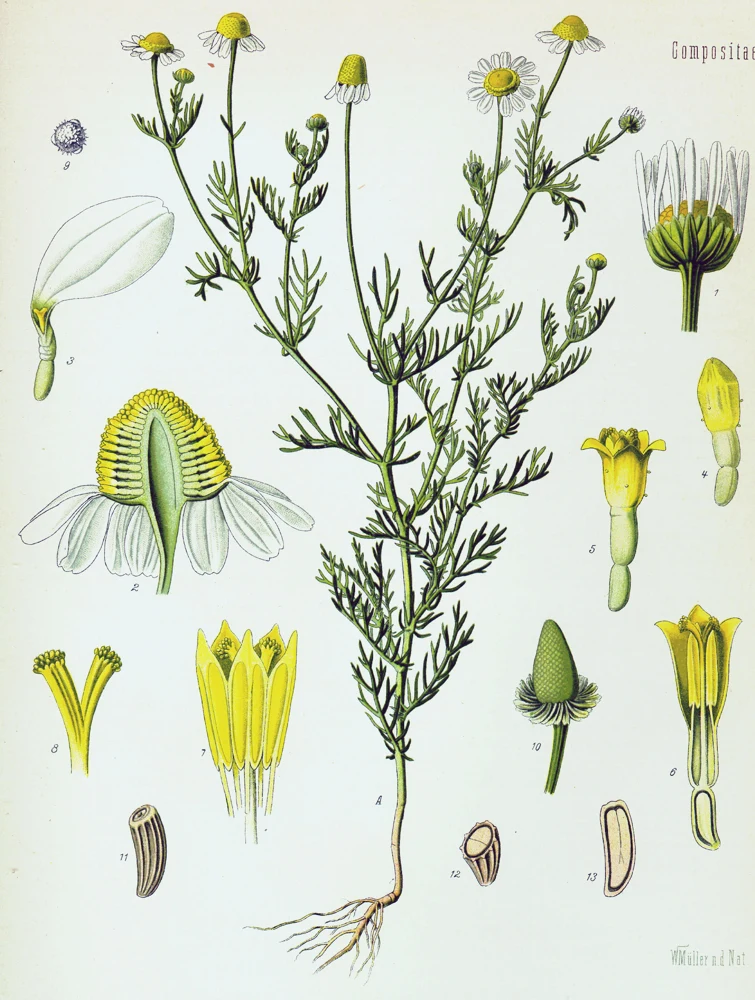
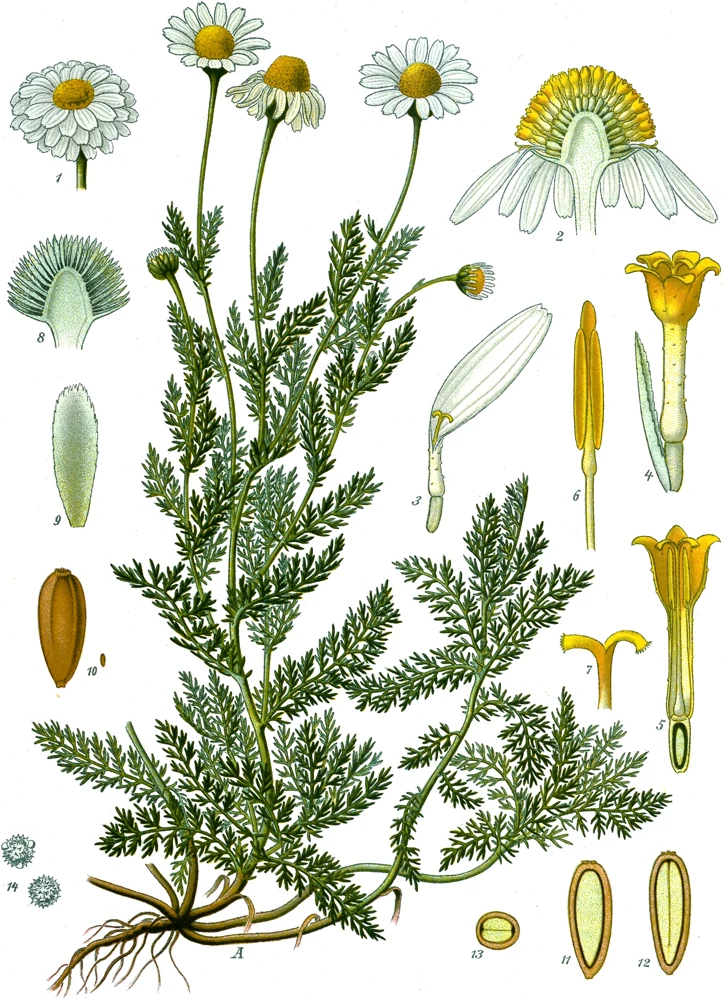
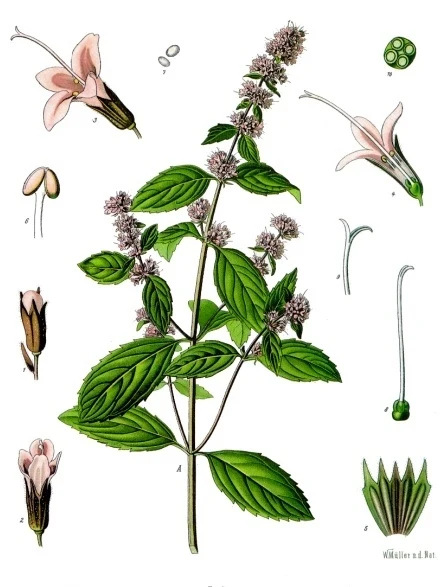
BOTANICAL IDENTITY
The right name is the first step.
Also known as: Aloysia triphylla, Lippia citriodora, lemon verbena
Do not confuse with Verbena officinalis.
An illustration is not enough to identify a plant for consumption. Do not forage for a species based solely on this profile.
01 · UNDERSTAND
Properties & uses.
Mild stress and sleep
Traditional use; does not constitute clinical evidence of efficacy against an anxiety disorder.
Read the sourceThe traditional uses described are not clinical proof of effectiveness. Evidence for one preparation cannot automatically be applied to another.
02 · UNDERSTAND THE ACTION
How does the plant act?
Lemon verbena leaf links two traditional uses: relaxation/sleep and digestive discomfort with gas. Experiments suggest sedative effects and relaxation of intestinal muscle, especially with aqueous extracts. They make these uses plausible but do not demonstrate a treatment for anxiety or insomnia. Common vervain is a different species.
Constituents to know.
Their presence and quantity depend on the plant part and preparation.
- Phenolic derivatives and volatile fraction
- Verbascoside, flavonoids and aromatic compounds are described. The HMPC has not identified any constituent with established therapeutic activity.Read the reference
Relaxation of intestinal muscle
Experimental activity of aqueous extracts is consistent with the digestive use. The muscle studied and laboratory concentrations do not necessarily reproduce the effect of a cup in humans.
Read the referenceRelaxation and sleep
Recognition remains based on traditional use for mild stress and to aid sleep; a herbal tea is not a proven treatment for an anxiety disorder.
Read the referenceWhat this means for preparation.
Prioritize identification as Aloysia citrodora and the leaf. A lemon scent is insufficient to identify the species or determine active constituent content.
03 · EXAMINE THE EVIDENCE
What the research shows.
A laboratory or animal result alone does not demonstrate a benefit in humans. Each result must be read alongside the preparation studied and its limitations.
Gap between experience and clinical evidence
- Type of research
- EMA report reviewing pharmacology and available studies.
- Preparation concerned
- Leaves, particularly aqueous extracts in preclinical work.
- Observed results
- The sedative and relaxing activities support plausibility, but the data do not allow well-established use.
- Limitations to consider
- Concentrated commercial preparations cannot automatically be equated with an infusion.
What can we take from this?
Research does not allow the result to be attributed to a single “active ingredient”. If a preparation reduces alertness, this has practical implications for driving.
Documentary review dated 09/10/2026. The references remain available to check the context.
04 · CHOOSE A PREPARATION
One plant, several preparations.
Only forms documented in this profile’s sources are presented.
InfusionLeaves · Route: oral
Comminuted leaves; uses for sleep or digestion.
Please note: Check the preparation and its leaflet; concentrations are not interchangeable.
Read the sourceDecoctionLeaves · Route: oral
Preparation documented for mild stress.
Please note: The preparation differs from an infusion.
Read the source05 · BEFORE ANY USE
Precautions & contraindications.
This guidance does not cover every individual situation. Missing information is not a guarantee of safety.
Contraindications
- Allergy to the plant or to Verbenaceae.
Medicine interactions
- No interactions reported in the monograph; a review of medicines is recommended.
Adverse effects
- This entry does not provide an exhaustive list of adverse effects.
Pregnancy & breastfeeding
Pregnancy and breastfeeding: not recommended due to lack of data.
Children & adolescents
Use in children is not established; do not extrapolate an adult dose.
If symptoms persist, worsen or are unusual, consult a healthcare professional. In an emergency, contact the emergency services.
06 · PUTTING KNOWLEDGE INTO PRACTICE
Preparations & recipes.
A DOCUMENTED PREPARATION
Lemon verbena infusion — evening ritual
Traditional use as an aid to sleep. This concerns Aloysia citrodora leaves and does not establish that a tea treats insomnia.
Plant part: Dried leaves
Ingredients & quantities
- 1–2 g dried, cut leaves of Aloysia citrodora Paláu
- 200 ml drinking water, brought to the boil
Preparation steps
- Check the botanical name and plant part on a product intended for herbal tea; weigh the stated quantity.
- Place the herb in a heatproof cup and pour over 200 ml boiling water.
- Steep for 5–15 minutes unless the product leaflet specifies otherwise. This is the general method in the EMA glossary; the plant monograph does not specify a particular steeping time.
- Strain, then let the infusion cool to a comfortable drinking temperature.
Use: Monograph reference for aiding sleep: one 200 ml preparation half an hour before bedtime. Seek advice if difficulties persist beyond 2 weeks, or sooner if they worsen.
Storage: Prepare immediately before use, as specified by the EMA glossary. The monograph does not document a household storage period; do not prepare a batch for later use.
Before you start. This guide restricts use to adults aged 18 and over. Not recommended during pregnancy or breastfeeding because safety data are insufficient. Contraindicated with allergy to lemon verbena or other Verbenaceae plants. Alertness may be impaired: do not drive or use machinery if affected. Do not confuse with Verbena officinalis. Stop and seek advice if an adverse reaction occurs. No interactions are reported in this monograph; this does not establish compatibility with medicines. Ask a pharmacist if you take medication.
A DOCUMENTED PREPARATION
Lemon verbena infusion — digestive reference
Traditional use for mild digestive complaints, particularly bloating and flatulence. The quantity for this use differs from the evening infusion; these preparations should not be combined.
Plant part: Dried cut leaves
Ingredients & quantities
- 2–3 g dried cut leaves of Aloysia citrodora Paláu
- 200 ml boiling drinking water
Preparation steps
- Check the botanical name and plant part on a quality-controlled herbal tea; weigh the herb.
- Pour 200 ml boiling drinking water over the herb in a heatproof container.
- Steep for 5–15 minutes unless the product leaflet says otherwise. This is the EMA glossary’s general method; the monograph gives no preparation-specific time.
- Strain, then allow to cool to a comfortable temperature before drinking.
Use: Selected digestive EMA option: 2–3 g in 200 ml, 1–3 times daily. Do not combine with the evening-infusion or decoction schedule. Seek advice if symptoms persist over 2 weeks or worsen.
Storage: Prepare immediately before use, following the EMA glossary. The monograph provides no domestic storage period; do not prepare a stock batch.
Before you start. For adults aged 18+ in this collection. Not recommended during pregnancy or breastfeeding because sufficient safety data are lacking. Contraindicated with lemon verbena or Verbenaceae allergy. Do not confuse with Verbena officinalis. May impair alertness: do not drive or use machinery if affected. Stop if an adverse reaction occurs. No interactions are reported in this monograph; this does not establish compatibility with medicines. Ask a pharmacist if you take medication.
A DOCUMENTED PREPARATION
Lemon verbena decoction — traditional mild-stress reference
A traditional preparation distinct from the evening infusion, described for mild symptoms of stress. Its different concentration requires precise adherence to the leaflet; it does not treat an anxiety disorder.
Plant part: Dried cut leaves
Ingredients & quantities
- 5 g dried cut leaves of Aloysia citrodora Paláu
- 100 ml boiling drinking water
Preparation steps
- Check the identity Aloysia citrodora and weigh 5 g dried cut leaves.
- Use 100 ml boiling drinking water with the herb in a suitable small saucepan, as the monograph specifies for this decoction.
- Maintain a simmer according to the tea’s leaflet. The EMA glossary generally gives 15–30 minutes for decoctions, but this monograph sets no plant-specific time: ask a pharmacist if the leaflet does not specify the method.
- Strain and allow to cool. Do not prolong cooking to reduce or further concentrate the preparation.
Use: EMA reference: 5 g in 100 ml as a decoction, 3 times daily. Confirm the method with a pharmacist if the product leaflet does not describe it. Do not add the other verbena preparations. Seek advice if symptoms persist beyond 2 weeks or worsen.
Storage: Prepare immediately before use, following the EMA glossary. The monograph provides no domestic storage period; do not prepare a stock batch.
Before you start. For adults aged 18+ in this collection. Not recommended during pregnancy or breastfeeding because sufficient safety data are lacking. Contraindicated with lemon verbena or Verbenaceae allergy. Do not confuse with Verbena officinalis. May impair alertness: do not drive or use machinery if affected. Stop if an adverse reaction occurs. No interactions are reported in this monograph; this does not establish compatibility with medicines. Ask a pharmacist if you take medication.
07 · CHECK THE SOURCES
Sources for this profile.
- EMA — Verbenae citriodorae folium: official dossierAccessed on 09/10/2026
- EMA — Aloysia citrodora Paláu, folium: monograph, preparation and precautionsAccessed on 09/10/2026
- EMA — assessment report on Aloysia citrodora Paláu (Leaves)Accessed on 09/10/2026
- EMA — Glossary on herbal teas, section 4: general preparation methodAccessed on 09/10/2026
Illustration: H. Zell · CC BY-SA 3.0. View the original image and its licence. Image resized and converted to WebP.
A TOUCH OF SOLÉA
Myriam’s tip
Myriam is reviewing the tip for this profile.
Myriam