BOTANICAL IDENTITY
The right name is the first step.
Also known as: No synonyms listed.
The properties of the flowers do not validate those of the fruits, leaves or bark.
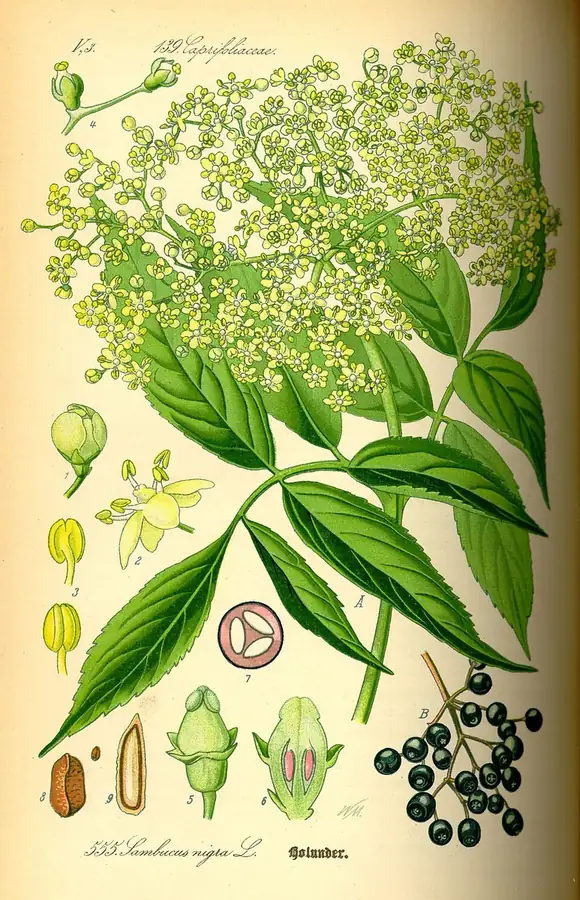
An illustration is not enough to identify a plant for consumption. Do not forage for a species based solely on this profile.
01 · UNDERSTAND
Properties & uses.
Onset of a cold
Traditional use for the first symptoms of a cold; clinical evidence is insufficient.
Read the sourceThe traditional uses described are not clinical proof of effectiveness. Evidence for one preparation cannot automatically be applied to another.
02 · UNDERSTAND THE ACTION
How does the plant act?
The black elder entry primarily concerns flowers traditionally used at the start of a cold. Berries and their extracts have a different literature, which cannot be applied to the flower infusion. The sensation provided by a hot drink does not demonstrate that the plant destroys a virus or generally strengthens immunity.
Constituents to know.
Their presence and quantity depend on the plant part and preparation.
- Flower flavonoids
- Rutoside and derivatives of quercetin and kaempferol are among the constituents; their presence is not clinical antiviral evidence.Read the reference
Early cold symptoms
Flower use is traditional and symptomatic; it is not intended to prevent or cure influenza.
Read the referenceWhat this means for preparation.
Look for the word “flower” on the label and read the complete composition of an elder syrup. The plant part and species are essential to avoid mistakes when gathering plants.
03 · EXAMINE THE EVIDENCE
What the research shows.
A laboratory or animal result alone does not demonstrate a benefit in humans. Each result must be read alongside the preparation studied and its limitations.
The lack of trials on the flower
- Type of research
- EMA scientific assessment report on Sambucus nigra, flos.
- Preparation concerned
- Flowers, herbal tea and defined flower preparations.
- Observed results
- Historical documentation supports traditional use.
- Limitations to consider
- No clinical efficacy trial of the flower was available in the assessment; trials of berries, mixtures or different extracts do not fill this gap.
What can we take from this?
This guide does not turn the presence of flavonoids into an immune promise. High fever, breathing difficulties or worsening symptoms fall outside the scope of traditional use.
Documentary review dated 09/10/2026. The references remain available to check the context.
04 · CHOOSE A PREPARATION
One plant, several preparations.
Only forms documented in this profile’s sources are presented.
Herbal teaFlower · Route: oral
05 · BEFORE ANY USE
Precautions & contraindications.
This guidance does not cover every individual situation. Missing information is not a guarantee of safety.
Contraindications
- Allergy to the preparation.
Medicine interactions
- No established interactions in the information consulted; check medicines.
Adverse effects
- No effects reported in the EMA summary consulted.
Pregnancy & breastfeeding
Pregnancy and breastfeeding: medicinal use is not recommended due to insufficient data.
Children & adolescents
Not recommended under 12 years of age.
If symptoms persist, worsen or are unusual, consult a healthcare professional. In an emergency, contact the emergency services.
06 · PUTTING KNOWLEDGE INTO PRACTICE
Preparations & recipes.
A DOCUMENTED PREPARATION
Elderflower infusion
Reference for the early symptoms of a common cold. Traditional use; robust clinical trials have not established this preparation’s efficacy.
Plant part: Dried flowers
Ingredients & quantities
- 2–5 g dried, identified Sambucus nigra L. flowers supplied for herbal tea
- 150 ml boiling drinking water
Preparation steps
- Weigh the identified, dried, cut plant part supplied for this use.
- Pour 150 ml boiling drinking water over the herb.
- Steep for 5–15 minutes: the EMA glossary’s general reference, as the monograph gives no specific duration. Follow the product leaflet first.
- Strain and allow to cool to a comfortable temperature before use.
Use: For adults aged 18+ in this collection. One preparation per dose, 3 times daily. Seek advice if symptoms last over one week, worsen, or if fever, breathing difficulty or purulent sputum develops.
Storage: Prepare immediately before use. No storage period is established here; do not make a stock batch (EMA glossary, §4).
Before you start. Contraindicated with elderflower allergy. This preparation covers only Sambucus nigra flowers: not leaves, bark, berries or another elder species. No reported interaction does not mean compatibility with every medicine. Use is not recommended during pregnancy or breastfeeding because data are insufficient.
07 · CHECK THE SOURCES
Sources for this profile.
- EMA — Sambuci flos: dossier and documentsAccessed on 09/10/2026
- EMA — Sambuci fructus: dossier and documentsAccessed on 09/10/2026
- ANSES — precautions for herbal supplements, June 2023 tableAccessed on 09/10/2026
- EMA — Scientific assessment report: Sambucus nigraAccessed on 09/10/2026
- EMA — Sambucus nigra L., flos: monograph, preparation and precautionsAccessed on 09/10/2026
- EMA — Glossary on herbal teas: general preparation method, §4Accessed on 09/10/2026
Illustration: Flora von Deutschland, Österreich und der Schweiz — Otto Wilhelm Thomé (1885), via Wikimedia Commons · Public domain. View the original image and its licence. Image resized and converted to WebP.
A TOUCH OF SOLÉA
Myriam’s tip
Myriam is reviewing the tip for this profile.
Myriam