Identity & origin
BOTANICAL IDENTITY
The right name is the first step.
This profile concerns the root. The uses described depend on the preparation.
Also known as: No synonyms listed.
Check the scientific name and the part used; a photograph is not sufficient for foraging plants intended for consumption.
An illustration is not enough to identify a plant for consumption. Do not forage for a species based solely on this profile.
Uses & evidence
UNDERSTANDING THE USES
Properties & uses.
Digestion
Traditional use of oral root preparations for dyspepsia and digestive burning sensations; clinical benefit is not established for all preparations.
Use considered plausible in a traditional-use monograph. That status alone does not demonstrate clinical efficacy.
Read the sourceCough associated with a cold
Traditional use of oral root preparations as an expectorant for cold-associated cough.
Use considered plausible in a traditional-use monograph. That status alone does not demonstrate clinical efficacy.
Read the sourceThe traditional uses described are not clinical proof of effectiveness. Evidence for one preparation cannot automatically be applied to another.
Precautions before use
BEFORE ANY USE
Precautions & contraindications.
This guidance does not cover every individual situation. Missing information is not a guarantee of safety.
Contraindications & precautions
- Source-listed contraindicationAllergy to the active substance.Source
- PrecautionUse is not recommended with hypertension, low potassium, kidney, liver or cardiovascular disease. Avoid combining liquorice-containing products: fluid retention, potassium loss and rhythm disorders may occur.Source
Medicine interactions
- Possible interactionDo not combine with diuretics, cardiac glycosides including digoxin, corticosteroids, stimulant laxatives or medicines that aggravate electrolyte imbalance.Source
- Possible interactionMay oppose the effect of antihypertensive medicines.Source
- Reported interactionA modest reduction in midazolam and omeprazole exposure was observed with a defined glycyrrhizin regimen. The relevance depends on the product; use caution with medicines metabolised by CYP3A4.Source
“Reported” does not prove causality; “possible” may reflect indirect evidence. “None reported” means none in the cited source, not that all combinations have been studied. Do not stop a prescribed treatment based on this profile.
Adverse effects
- Possible hypertension, fluid retention, low potassium and heart rhythm disturbances.
Pregnancy & breastfeeding
Use is not recommended during pregnancy or breastfeeding, or in women who could become pregnant and are not using contraception. Animal reproductive toxicity has been observed; glycyrrhizin has been detected in some breast milk samples and infant effects are unknown.
SourceChildren & adolescents
Medicinal use is not recommended below 18 years because adequate data are lacking; follow the preparation-specific leaflet.
SourceIf symptoms persist, worsen or are unusual, consult a healthcare professional. In an emergency, contact the emergency services.
Forms & how they are used
DOCUMENTED FORMS
One plant, several preparations.
Only forms documented in this profile’s sources are presented.
Herbal teaRoot · Route: oral
Fragmented root.
Please note: Follow the product's package leaflet; preparations are not interchangeable.
Read the sourceExtractRoot · Route: oral
Root preparation with controlled content.
Please note: Combining licorice foods, beverages and supplements increases exposure.
Read the sourceUnderstanding the plant’s actions
EXPLORE THE EVIDENCE
How does the plant act?
Licorice illustrates how biological activity can be important for safety without all claimed benefits being demonstrated. Its roots have traditional digestive and expectorant uses. They also expose users to glycyrrhizin, associated with cardiovascular effects that can be serious. Risk depends on the product, combined intake and the individual's health; a daily infusion is therefore not simply a neutral food.
Constituents to know.
Their presence and quantity depend on the plant part and preparation.
- Glycyrrhizin
- Root constituent involved in serious adverse effects. People with hypertension or heart or kidney disease may be particularly vulnerable.Read the reference
Digestive comfort
Traditional use concerns certain mild digestive complaints. It does not demonstrate healing of an ulcer or a digestive infection.
Use considered plausible in a traditional-use monograph. That status alone does not demonstrate clinical efficacy.
Read the referenceExpectoration
Certain root preparations are traditionally used for cough associated with a cold, without replacing assessment of a persistent cough.
Use considered plausible in a traditional-use monograph. That status alone does not demonstrate clinical efficacy.
Read the referenceCardiovascular adverse effects
The possibility of serious effects is documented, including with relatively low exposure in vulnerable people; this limits use well before any pursuit of benefit.
This entry describes a risk or interaction, not a beneficial property.
Read the referenceWhat this means for preparation.
Identify the preparation and count all sources: herbal teas, drinks, confectionery and supplements. Deglycyrrhizinated extracts cannot be considered equivalent to ordinary root.
Studies, findings & limitations
THE RESEARCH
What the research shows.
A laboratory or animal result alone does not demonstrate a benefit in humans. Each result must be read alongside the preparation studied and its limitations.
Safety depends on the individual's health
This entry describes a risk or interaction, not a beneficial property.
- Type of research
- NCCIH institutional summary of human and safety data.
- Preparation concerned
- Licorice root products containing glycyrrhizin.
- Observed results
- Serious effects have been reported in cases of hypertension, heart or kidney disease, and high salt intake.
- Limitations to consider
- These data do not allow a universally safe amount for home use to be set.
What can we take from this?
This does not lead to any recommendation to treat liver disease or replace a treatment. “Natural” and “low-dose” are not sufficient to conclude that it is harmless.
Documentary review dated 09/10/2026. The references remain available to check the context.
Sources & last review
CHECKING REFERENCES
Sources for this profile.
- EMA — Liquiritiae radix: assessment and documentsAccessed on 09/10/2026
- ANSES — summary of precautions for food supplements (June 2023)Accessed on 09/10/2026
- NCCIH — Licorice Root: Usefulness and SafetyAccessed on 09/10/2026
- EMA — document officiel relu : usages et sécurité, RéglisseAccessed on 09/10/2026
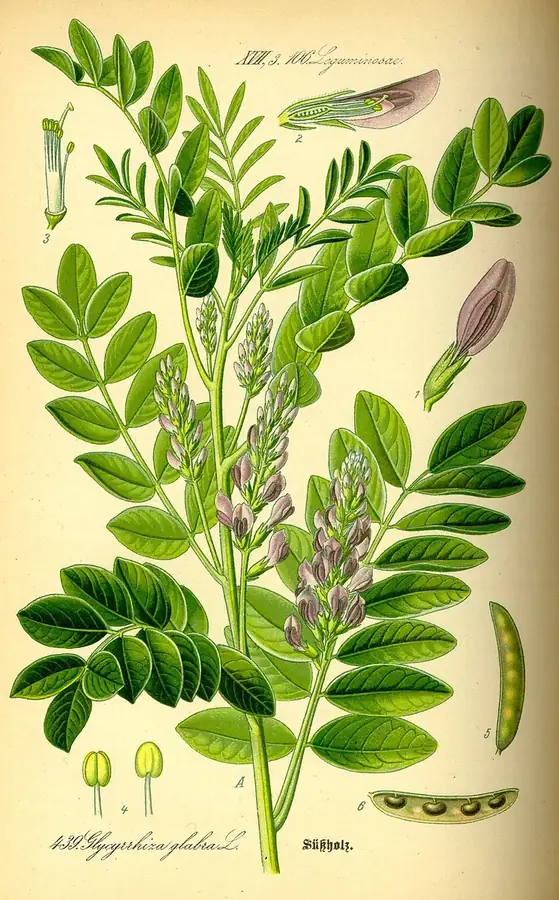
Image: Flora von Deutschland, Österreich und der Schweiz — Otto Wilhelm Thomé (1885), via Wikimedia Commons · Public domain. View the original image and its licence. Image resized and converted to WebP.