
Identity & origin
BOTANICAL IDENTITY
The right name is the first step.
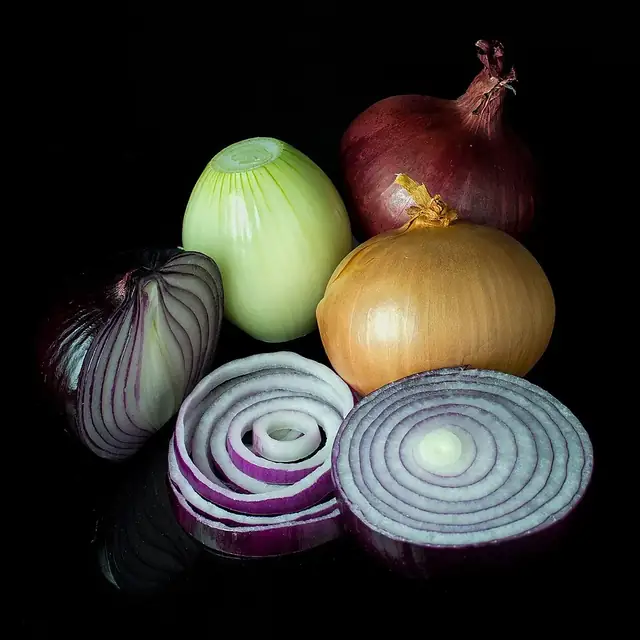
Onion is presented here as a documentary entry. The EMA has not adopted a therapeutic monograph for its bulb.
Also known as: No synonyms listed.
The botanical name, part and preparation must match. A photograph is not enough for identification intended for consumption.
An illustration is not enough to identify a plant for consumption. Do not forage for a species based solely on this profile.
Uses & evidence
UNDERSTANDING THE USES
Properties & uses.
Therapeutic properties not established here
No medicinal recipe or clinical benefit is validated by this profile.
The references do not establish a benefit. Lack of evidence is not assurance of safety.
Read the sourceThe traditional uses described are not clinical proof of effectiveness. Evidence for one preparation cannot automatically be applied to another.
Precautions before use
BEFORE ANY USE
Precautions & contraindications.
This guidance does not cover every individual situation. Missing information is not a guarantee of safety.
The following warnings do not constitute a complete review of interactions or contraindications. An unstudied combination cannot be considered compatible.
Contraindications & precautions
- Do not use in cases of known allergy to this plant.
Medicine interactions
- Interactions are not detailed here: have a pharmacist check treatments and the preparation.
“Reported” does not prove causality; “possible” may reflect indirect evidence. “None reported” means none in the cited source, not that all combinations have been studied. Do not stop a prescribed treatment based on this profile.
Adverse effects
- This entry does not provide an exhaustive list of adverse effects.
Pregnancy & breastfeeding
Pregnancy and breastfeeding: have the preparation checked; no self-medication is proposed here.
Children & adolescents
No pediatric use is proposed here; check with a professional.
If symptoms persist, worsen or are unusual, consult a healthcare professional. In an emergency, contact the emergency services.
Available evidence
EXPLORE THE EVIDENCE
The available evidence.
Onion as a food and a concentrated medicinal extract are two different things. The EMA report examined juices, raw or cooked bulbs, extracts and isolated substances, which explains why the results are difficult to compare. No therapeutic monograph was adopted. This does not call its culinary role into question; it limits what can be claimed about a preparation used for treatment.
Constituents to know.
Their presence and quantity depend on the plant part and preparation.
- Flavonols
- Quercetin and its glucosides are among the characterized constituents of the bulb. The profile varies with the variety; their presence does not demonstrate a therapeutic benefit.Read the reference
Experimental activities
Extracts have shown antimicrobial or other activities in the laboratory. The report highlights their heterogeneity and the sometimes high concentrations used.
Laboratory or animal observation. A human benefit cannot be inferred from this finding alone.
Read the referenceSkin and hair: limited scope
Skin research exists, but it does not constitute a recommendation to apply onion juice to a lesion or for hair loss.
The references do not establish a benefit. Lack of evidence is not assurance of safety.
Read the referenceLimitations to keep in mind.
A “rich in quercetin” claim describes composition, not an indication. A cosmetic product containing onion must be assessed as a whole formulation.
Studies, findings & limitations
THE RESEARCH
What the research shows.
A laboratory or animal result alone does not demonstrate a benefit in humans. Each result must be read alongside the preparation studied and its limitations.
Human data insufficiently comparable
The references do not establish a benefit. Lack of evidence is not assurance of safety.
- Type of research
- EMA review of small clinical studies.
- Preparation concerned
- Fresh onion, juice, heated onion or poorly characterized preparations.
- Observed results
- The methods and composition did not allow a recognised medicinal use to be established.
- Limitations to consider
- Some protocols were poorly described; dietary results cannot be transferred to a standardized extract.
What can we take from this?
A reliable wound-healing, antidiabetic or anti-infective effect cannot be established for every onion preparation. Reported respiratory allergies and dermatitis are a reminder that a food can also cause sensitization.
Documentary review dated 09/10/2026. The references remain available to check the context.
Sources & last review
CHECKING REFERENCES
Sources for this profile.
- EMA — Allii cepae bulbus: official dossierAccessed on 09/10/2026
- EMA — Assessment report on Allium cepa L. (bulb)Accessed on 09/10/2026
Image: Colin · CC BY-SA 3.0. View the original image and its licence. Image resized and converted to WebP.