Identity & origin
BOTANICAL IDENTITY
The right name is the first step.
The preparations assessed are liquid extracts applied locally to the skin or oral mucosa.
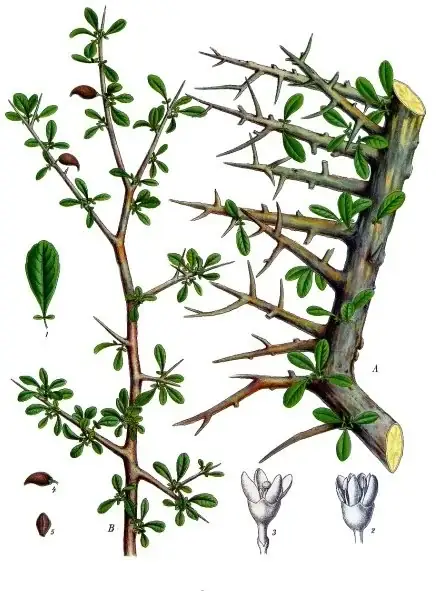
Also known as: Commiphora molmol
The botanical name, part and preparation must match. A photograph is not enough for identification intended for consumption.
An illustration is not enough to identify a plant for consumption. Do not forage for a species based solely on this profile.
Uses & evidence
UNDERSTANDING THE USES
Properties & uses.
Minor oral and skin lesions
Traditional uses for minor mouth ulcers/inflammation, small wounds and minor boils.
Use considered plausible in a traditional-use monograph. That status alone does not demonstrate clinical efficacy.
Read the sourceThe traditional uses described are not clinical proof of effectiveness. Evidence for one preparation cannot automatically be applied to another.
Precautions before use
BEFORE ANY USE
Precautions & contraindications.
This guidance does not cover every individual situation. Missing information is not a guarantee of safety.
Contraindications & precautions
- PrecautionAlcoholic extract: transient burning/irritation on application and skin allergies reported. This scope concerns local use only.Source
Medicine interactions
- Insufficient dataInteraction reassessment is incomplete: the accessible source does not allow a conclusion. Ask a pharmacist to review the exact preparation and medicines.Source
Other retained warnings · review incomplete
These existing warnings remain relevant to consult. Their exhaustive reassessment is outside this targeted review.
Restrictions and precautions
- Do not use in cases of known allergy to this plant.
Medicine interactions
- Interactions are not detailed here: have a pharmacist check treatments and the preparation.
Pregnancy, breastfeeding and children
Pregnancy and breastfeeding: have the preparation checked; no self-medication is proposed here.
Not recommended under 12 years.
“Reported” does not prove causality; “possible” may reflect indirect evidence. “None reported” means none in the cited source, not that all combinations have been studied. Do not stop a prescribed treatment based on this profile.
Adverse effects
- Skin allergies and local irritation reported.
Pregnancy & breastfeeding
Pregnancy/breastfeeding data were not fully reassessed; do not use without professional review.
Children & adolescents
EMA summary: adults and adolescents over 12, depending on the product; do not scale down an adult dose.
SourceIf symptoms persist, worsen or are unusual, consult a healthcare professional. In an emergency, contact the emergency services.
Forms & how they are used
DOCUMENTED FORMS
One plant, several preparations.
Only forms documented in this profile’s sources are presented.
Extract for local use in the mouthResin · Route: mouth
Product formulated for the mucous membrane.
Please note: Do not swallow a preparation intended for local use.
Read the sourceTopical extractResin · Route: topical
Preparation intended for the skin.
Please note: Alcohol may irritate and cause transient pain.
Read the sourceUnderstanding the plant’s actions
EXPLORE THE EVIDENCE
How does the plant act?
Myrrh is a gum resin, assessed mainly as a tincture for local use in the mouth or on the skin. Experimental antibacterial, anti-inflammatory and local anesthetic effects make traditional use plausible. However, the alcohol in some formulations itself contributes to effects and irritation: not everything can be attributed to the resin.
Minor inflammation of the mouth
Traditional use concerns minor lesions and does not replace oral hygiene or treatment of a dental cause.
Use considered plausible in a traditional-use monograph. That status alone does not demonstrate clinical efficacy.
Read the referenceExperimental local activities
The proposed antibacterial, anti-inflammatory or anaesthetic effects come from experimental studies. They do not demonstrate that a homemade preparation cures an infection.
Laboratory or animal observation. A human benefit cannot be inferred from this finding alone.
Read the referenceRole of the alcoholic formulation
Alcohol may contribute to antimicrobial activity, but may also cause pain and irritation on a wound. The vehicle is part of the product studied.
The references do not establish a benefit. Lack of evidence is not assurance of safety.
Read the referenceWhat this means for preparation.
Check whether a product is intended for the mouth or skin and its alcohol content. A rinse does not become a preparation to swallow.
Studies, findings & limitations
THE RESEARCH
What the research shows.
A laboratory or animal result alone does not demonstrate a benefit in humans. Each result must be read alongside the preparation studied and its limitations.
Why the digestive route is not accepted
Use considered plausible in a traditional-use monograph. That status alone does not demonstrate clinical efficacy.
- Type of research
- EMA report examining historical uses and available data.
- Preparation concerned
- Myrrh and tincture; distinction from extracts of other Commiphora parts.
- Observed results
- The dossier recognizes minor traditional oromucosal and topical uses; it does not recommend including ingestion for digestive complaints.
- Limitations to consider
- Historical recipes or mixtures do not constitute modern evidence of the efficacy of swallowing the resin alone.
What can we take from this?
The detailed composition is not presented as a single active ingredient. Long-standing use does not remove the need to consider skin allergies or to assess a deep or infected wound.
Documentary review dated 09/10/2026. The references remain available to check the context.
Sources & last review
CHECKING REFERENCES
Sources for this profile.
- EMA — Myrrha: official dossierAccessed on 09/10/2026
- EMA — assessment report on Commiphora molmol Engler (Resin)Accessed on 09/10/2026
Image: Franz Eugen Köhler, Köhler's Medizinal-Pflanzen · Public domain. View the original image and its licence. Image resized and converted to WebP.