Identity & origin
BOTANICAL IDENTITY
The right name is the first step.
The shared “grindeliae herba” monograph includes Grindelia camporum Greene. This profile is limited to the parts and preparations described in it.
Inclusion in a collective monograph does not prove that each species has been studied separately in humans. The form and pharmaceutical quality described remain decisive.
Also known as: No synonyms listed.
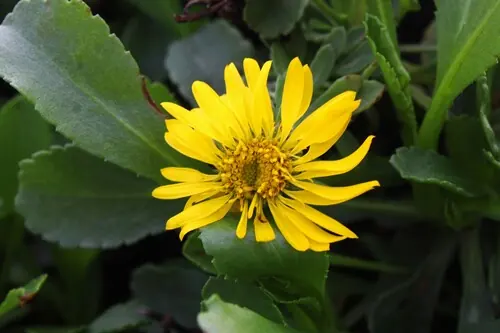
A common name and photograph do not guarantee identification. Check the botanical name and part indicated on a traceable product.
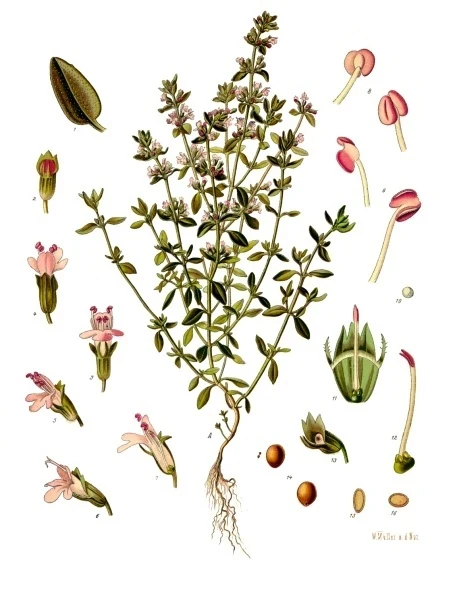
An illustration is not enough to identify a plant for consumption. Do not forage for a species based solely on this profile.
Uses & evidence
UNDERSTANDING THE USES
Properties & uses.
Cough associated with the common cold
Traditional oral use of the herb, as tea or specified extracts, for cold-associated cough. The shared monograph does not demonstrate clinical efficacy separately for each species.
Use considered plausible in a traditional-use monograph. That status alone does not demonstrate clinical efficacy.
Read the sourceThe traditional uses described are not clinical proof of effectiveness. Evidence for one preparation cannot automatically be applied to another.
Precautions before use
BEFORE ANY USE
Precautions & contraindications.
This guidance does not cover every individual situation. Missing information is not a guarantee of safety.
Contraindications & precautions
- Source-listed contraindicationAllergy to grindelia or other Asteraceae plants.Source
Medicine interactions
- No interaction reported in the sourceNo interactions are reported in the monograph for the specified preparations; this does not establish compatibility with every medicine.Source
“Reported” does not prove causality; “possible” may reflect indirect evidence. “None reported” means none in the cited source, not that all combinations have been studied. Do not stop a prescribed treatment based on this profile.
Adverse effects
- Digestive irritation is possible.
Pregnancy & breastfeeding
Medicinal use during pregnancy and breastfeeding is not recommended because adequate data are lacking; safety has not been established.
SourceChildren & adolescents
Medicinal use is not recommended below 18 years because adequate data are lacking; follow the preparation-specific leaflet.
SourceIf symptoms persist, worsen or are unusual, consult a healthcare professional. In an emergency, contact the emergency services.
Forms & how they are used
DOCUMENTED FORMS
One plant, several preparations.
Only forms documented in this profile’s sources are presented.
InfusionFlowering aerial parts · Route: oral
Preparation described in the shared monograph.
Please note: Follow the product's package leaflet; concentrations are not interchangeable.
Read the sourceTinctureFlowering aerial parts · Route: oral
Preparation described in the shared monograph.
Please note: Alcohol; follow the leaflet and do not extrapolate a herbal tea dose.
Read the sourceUnderstanding the plant’s actions
EXPLORE THE EVIDENCE
How does the plant act?
G. camporum is included in the shared monograph on Grindelia aerial parts. Its inclusion is botanical and regulatory; it does not mean that studies conducted on G. squarrosa have been repeated with it. A cautious approach preserves traditional use while declining a level of mechanistic precision that the species-specific data do not allow.
Cough associated with a cold
Relief is based on tradition for the monographed preparations; no quantified effect specific to G. camporum is established here.
Use considered plausible in a traditional-use monograph. That status alone does not demonstrate clinical efficacy.
Read the referenceWhat this means for preparation.
The full Latin name allows shared evidence to be distinguished from research specific to another species. Details of the solvent would also be needed to compare two extracts.
Studies, findings & limitations
THE RESEARCH
What the research shows.
A laboratory or animal result alone does not demonstrate a benefit in humans. Each result must be read alongside the preparation studied and its limitations.
An accepted species, but no separate result
The references do not establish a benefit. Lack of evidence is not assurance of safety.
- Type of research
- Shared EMA assessment
- Preparation concerned
- Aerial parts of several Grindelia species, including G. camporum.
- Observed results
- The monograph retains a traditional framework.
- Limitations to consider
- Cellular research on G. squarrosa does not demonstrate the mechanism of G. camporum; no separate human trial is presented.
What can we take from this?
A complete profile of the pharmacologically relevant constituents of G. camporum is not sufficiently established in the selected passages to identify a single active substance. This guarantees neither absence of activity nor safety.
Documentary review dated 09/10/2026. The references remain available to check the context.
Sources & last review
CHECKING REFERENCES
Sources for this profile.
- EMA — grindeliae herbaAccessed on 09/10/2026
- EMA — assessment of grindeliaAccessed on 09/10/2026
- EMA — document officiel relu : usages et sécurité, Grindélia des champsAccessed on 09/10/2026
Image: Dominic · CC BY 4.0. View the original image and its licence. Image resized and converted to WebP.