Identity & origin
BOTANICAL IDENTITY
The right name is the first step.
The European monograph covers minor wounds; it does not validate memory or circulation claims here.
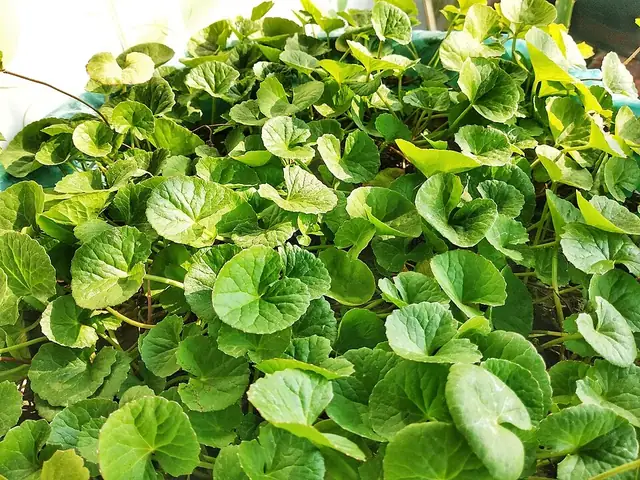
Also known as: gotu kola
The botanical name, part and preparation must match. A photograph is not enough for identification intended for consumption.
An illustration is not enough to identify a plant for consumption. Do not forage for a species based solely on this profile.
Uses & evidence
UNDERSTANDING THE USES
Properties & uses.
Minor wounds
Traditional local use to promote their healing.
Use considered plausible in a traditional-use monograph. That status alone does not demonstrate clinical efficacy.
Read the sourceThe traditional uses described are not clinical proof of effectiveness. Evidence for one preparation cannot automatically be applied to another.
Precautions before use
BEFORE ANY USE
Precautions & contraindications.
This guidance does not cover every individual situation. Missing information is not a guarantee of safety.
Contraindications & precautions
- Source-listed contraindicationAllergy to centella or other Apiaceae plants.Source
Medicine interactions
- No interaction reported in the sourceNo interactions reported in the monograph for these preparations; compatibility with every medicine is not established.Source
Other retained warnings · review incomplete
These existing warnings remain relevant to consult. Their exhaustive reassessment is outside this targeted review.
Restrictions and precautions
- Contraindication — Allergy to centella or other Apiaceae plants.
Medicine interactions
- No interactions reported in the monograph for these preparations; compatibility with every medicine is not established.
Pregnancy, breastfeeding and children
Not recommended during pregnancy or breastfeeding: insufficient safety data.
Not recommended below 18 because evidence is insufficient.
“Reported” does not prove causality; “possible” may reflect indirect evidence. “None reported” means none in the cited source, not that all combinations have been studied. Do not stop a prescribed treatment based on this profile.
Adverse effects
- No known adverse effects in the monograph; this does not mean zero risk.
Pregnancy & breastfeeding
Not recommended during pregnancy or breastfeeding: insufficient safety data.
SourceChildren & adolescents
Not recommended below 18 because evidence is insufficient.
SourceIf symptoms persist, worsen or are unusual, consult a healthcare professional. In an emergency, contact the emergency services.
Forms & how they are used
DOCUMENTED FORMS
One plant, several preparations.
Only forms documented in this profile’s sources are presented.
Topical preparationAerial parts · Route: topical
Product intended for local care, according to its package leaflet.
Please note: Do not use on a deep or infected wound without medical advice.
Read the sourceUnderstanding the plant’s actions
EXPLORE THE EVIDENCE
How does the plant act?
Centella is studied particularly for tissue repair. The herb traditionally used on minor wounds must be distinguished from the highly purified triterpene fractions used in certain medicines or trials. The EMA report stresses that these reconstituted fractions no longer correspond to an ordinary herbal preparation. Their documentation therefore does not validate all centella creams, powders or capsules.
Constituents to know.
Their presence and quantity depend on the plant part and preparation.
- Triterpenes, known as centelloids
- Asiaticoside, madecassoside and their aglycones are studied. Their proportions vary with origin and growing conditions.Read the reference
Collagen synthesis
Extracts and triterpenes have altered collagen production in cell cultures. An increase in a test tube does not prove an anti-aging effect or wound healing in humans.
Laboratory or animal observation. A human benefit cannot be inferred from this finding alone.
Read the referenceSmall superficial wounds
The monograph recognises traditional topical use of the herb within a limited scope; it does not cover all indications of purified products.
Use considered plausible in a traditional-use monograph. That status alone does not demonstrate clinical efficacy.
Read the referenceWhat this means for preparation.
Reading the exact extract name and route studied is crucial. A study of an oral fraction or a formulated dressing does not describe a powder to apply yourself.
Studies, findings & limitations
THE RESEARCH
What the research shows.
A laboratory or animal result alone does not demonstrate a benefit in humans. Each result must be read alongside the preparation studied and its limitations.
Why TECA is not a herbal tea
The references do not establish a benefit. Lack of evidence is not assurance of safety.
- Type of research
- EMA report describing manufacturing and the scope of the studies.
- Preparation concerned
- Purified TECA/TTFCA fractions, enriched and reconstituted in triterpenes.
- Observed results
- These preparations have their own documentation, distinct from that of the whole herb.
- Limitations to consider
- The purification steps and altered proportions prevent the conclusions from being transferred directly to any arbitrary extract.
What can we take from this?
Neurological, circulatory and cosmetic research directions are not automatically validated indications. A deep, infected or poorly healing wound needs assessment.
Documentary review dated 09/10/2026. The references remain available to check the context.
Sources & last review
CHECKING REFERENCES
Sources for this profile.
- EMA — Centellae asiaticae herba: official dossierAccessed on 09/10/2026
- EMA — monograph or public statement on Centella asiaticaAccessed on 09/10/2026
- EMA — assessment report on Centella asiatica (L.) Urb. (Aerial parts)Accessed on 09/10/2026
Image: Shahidul Hasan Roman · CC BY-SA 4.0. View the original image and its licence. Image resized and converted to WebP.