
Identity & origin
BOTANICAL IDENTITY
The right name is the first step.
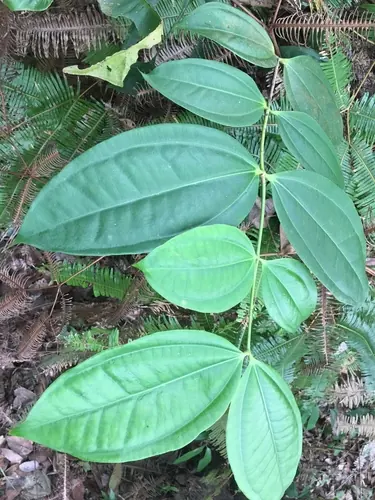
Strychnos ignatii P.J.Bergius belongs to Loganiaceae. Kew records it as a liana. Saint Ignatius bean comes from Strychnos ignatii. The common name does not denote an edible legume or replace botanical identification.
Also known as: No synonyms listed.
Saint Ignatius bean comes from Strychnos ignatii. The common name does not denote an edible legume or replace botanical identification. A photograph alone cannot establish identification for consumption.
An illustration is not enough to identify a plant for consumption. Do not forage for a species based solely on this profile.
Uses & evidence
UNDERSTANDING THE USES
Properties & uses.
Documentary reference — seed
ANSM lists Strychnos ignatii for the following material: seed. Inclusion in List B signals that potential adverse effects outweigh the expected therapeutic benefit. The entry does not establish clinical efficacy.
The references do not establish a benefit. Lack of evidence is not assurance of safety.
Read the sourceThe traditional uses described are not clinical proof of effectiveness. Evidence for one preparation cannot automatically be applied to another.
Precautions before use
BEFORE ANY USE
Precautions & contraindications.
This guidance does not cover every individual situation. Missing information is not a guarantee of safety.
The following warnings do not constitute a complete review of interactions or contraindications. An unstudied combination cannot be considered compatible.
Contraindications & precautions
- Safety precaution: do not use this material for self-medication or in a home preparation.
Medicine interactions
- Interactions specific to this species and each preparation are not established by this notice’s documentary sources. This does not establish compatibility with medicines.
“Reported” does not prove causality; “possible” may reflect indirect evidence. “None reported” means none in the cited source, not that all combinations have been studied. Do not stop a prescribed treatment based on this profile.
Adverse effects
- Painful spasms, stiffness, seizures and potentially life-threatening breathing problems. Suspected ingestion requires urgent medical assessment.
Pregnancy & breastfeeding
Pregnancy and breastfeeding: no home use is proposed; this notice does not establish evidence supporting use in these situations.
Children & adolescents
Do not give to children on the basis of this notice. A botanical inventory is not a paediatric safety evaluation.
If symptoms persist, worsen or are unusual, consult a healthcare professional. In an emergency, contact the emergency services.
Available evidence
EXPLORE THE EVIDENCE
The available evidence.
This toxicological dossier concerns Strychnos ignatii P.J.Bergius. Painful spasms, stiffness, seizures and potentially life-threatening breathing problems. Suspected ingestion requires urgent medical assessment. These risks support caution, not a therapeutic benefit.
Constituents to know.
Their presence and quantity depend on the plant part and preparation.
- Strychnine
- CDC identifies seeds of this species among natural sources of this toxic alkaloid.Read the reference
Neuromuscular toxicity
Strychnine can produce generalized muscle spasms, seizures and respiratory failure. Exposure can be fatal; this is not a tonic effect to pursue.
This entry describes a risk or interaction, not a beneficial property.
Read the referenceLimitations to keep in mind.
Do not consume or prepare the plant at home. After suspected exposure, seek poison-centre advice; breathing, neurological or cardiovascular symptoms require urgent help.
Studies, findings & limitations
THE RESEARCH
What the research shows.
A laboratory or animal result alone does not demonstrate a benefit in humans. Each result must be read alongside the preparation studied and its limitations.
CDC / NIOSH — Strychnine: Biotoxin
This entry describes a risk or interaction, not a beneficial property.
- Type of research
- Institutional or university toxicology summary; this document is not an efficacy trial.
- Preparation concerned
- Exposures and products described by the source; no home dose or preparation is inferred.
- Observed results
- Strychnine can produce generalized muscle spasms, seizures and respiratory failure. Exposure can be fatal; this is not a tonic effect to pursue.
- Limitations to consider
- The document identifies risks, does not systematically measure their frequency and establishes no safe quantity. Risks are not therapeutic properties.
What can we take from this?
“Insufficient evidence” refers to establishing therapeutic benefit and use, not to absence of the described risk. This notice does not replace individual toxicological assessment or establish a safe quantity.
Documentary review dated 09/10/2026. The references remain available to check the context.
Sources & last review
CHECKING REFERENCES
Sources for this profile.
- ANSM — French Pharmacopoeia, List B, January 2026, p. 6Accessed on 09/10/2026
- Royal Botanic Gardens, Kew — Plants of the World Online : Strychnos ignatii P.J.BergiusAccessed on 09/10/2026
- CDC / NIOSH — Strychnine: BiotoxinAccessed on 09/10/2026
Image: Al Kordesch · CC0 1.0. View the original image and its licence. Image resized and converted to WebP.