Identity & origin
BOTANICAL IDENTITY
The right name is the first step.
The shared monograph “salicis cortex” includes Salix × fragilis L. This profile is limited to the parts and preparations described there. Kew recognizes this name as a hybrid of S. alba and S. euxina.
Inclusion in a collective monograph does not prove that each species has been studied separately in humans. The form and pharmaceutical quality described remain decisive.
Also known as: Salix fragilis
A common name and photograph do not guarantee identification. Check the botanical name and part indicated on a traceable product.
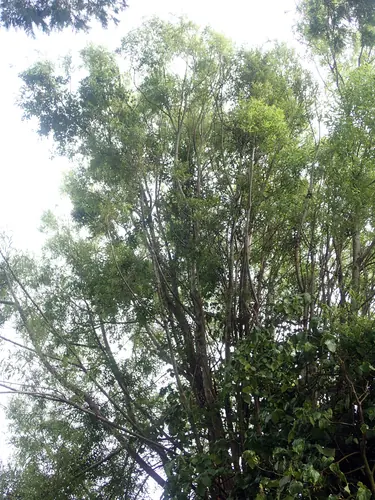
An illustration is not enough to identify a plant for consumption. Do not forage for a species based solely on this profile.
Uses & evidence
UNDERSTANDING THE USES
Properties & uses.
Minor joint pain
Shared traditional use; does not demonstrate the efficacy of gathered bark or any individual species.
Use considered plausible in a traditional-use monograph. That status alone does not demonstrate clinical efficacy.
Read the sourceThe traditional uses described are not clinical proof of effectiveness. Evidence for one preparation cannot automatically be applied to another.
Precautions before use
BEFORE ANY USE
Precautions & contraindications.
This guidance does not cover every individual situation. Missing information is not a guarantee of safety.
Contraindications & precautions
- Source-listed contraindicationSalicylate/NSAID allergy (including triggered asthma), active ulcer, clotting disorder, G6PD deficiency or severe liver/kidney disease.Source
- PrecautionAspirin and other NSAIDs: avoid combining without medical advice.Source
Medicine interactions
- Possible interactionBark may increase anticoagulant effects, particularly coumarins; medical review is essential.Source
- Possible interactionWith anticoagulants, antiplatelet medicines, salicylates or NSAIDs: prior medical advice according to ANSES.Source
Other retained warnings · review incomplete
These existing warnings remain relevant to consult. Their exhaustive reassessment is outside this targeted review.
Restrictions and precautions
- Contraindication — Salicylate/NSAID allergy (including triggered asthma), active ulcer, clotting disorder, G6PD deficiency or severe liver/kidney disease.
- Precaution — Aspirin and other NSAIDs: avoid combining without medical advice.
Medicine interactions
- Bark may increase anticoagulant effects, particularly coumarins; medical review is essential.
- With anticoagulants, antiplatelet medicines, salicylates or NSAIDs: prior medical advice according to ANSES.
Pregnancy, breastfeeding and children
Bark supplements: pregnancy and breastfeeding are contraindicated by ANSES. For monographed medicines, EMA contraindicates the third trimester and advises against earlier pregnancy and breastfeeding.
Contraindicated below 18, including concern about Reye syndrome.
“Reported” does not prove causality; “possible” may reflect indirect evidence. “None reported” means none in the cited source, not that all combinations have been studied. Do not stop a prescribed treatment based on this profile.
Adverse effects
- Digestive disturbances and allergic reactions.
Pregnancy & breastfeeding
Bark supplements: pregnancy and breastfeeding are contraindicated by ANSES. For monographed medicines, EMA contraindicates the third trimester and advises against earlier pregnancy and breastfeeding.
SourceChildren & adolescents
Contraindicated below 18, including concern about Reye syndrome.
SourceIf symptoms persist, worsen or are unusual, consult a healthcare professional. In an emergency, contact the emergency services.
Forms & how they are used
DOCUMENTED FORMS
One plant, several preparations.
Only forms documented in this profile’s sources are presented.
Bark for herbal teaBark · Route: oral
Preparation described in the shared monograph.
Please note: Follow the product's package leaflet; concentrations are not interchangeable.
Read the sourceExtractBark · Route: oral
Preparation described in the shared monograph.
Please note: Follow the product's package leaflet; concentrations are not interchangeable.
Read the sourceUnderstanding the plant’s actions
EXPLORE THE EVIDENCE
How does the plant act?
Identity is a real scientific limitation here: the historical name Salix fragilis used in older documents does not guarantee that it refers precisely to the current hybrid taxon Salix × fragilis. Its presence in a shared monograph therefore does not allow all group results to be attributed to it without examination.
Uses of bark in the group
Minor joint pain falls within the traditional framework; no separate efficacy is asserted for the hybrid taxon in this profile.
Use considered plausible in a traditional-use monograph. That status alone does not demonstrate clinical efficacy.
Read the referenceWhat this means for preparation.
Check the accepted taxon, bark part and studied product together. A photograph of a crack willow is insufficient to establish this continuity in the documentation.
Studies, findings & limitations
THE RESEARCH
What the research shows.
A laboratory or animal result alone does not demonstrate a benefit in humans. Each result must be read alongside the preparation studied and its limitations.
A collective monograph, not a hybrid trial
The references do not establish a benefit. Lack of evidence is not assurance of safety.
- Type of research
- EMA assessment of barks from several Salix species
- Preparation concerned
- Defined bark preparations; botanical identity must be checked for each study.
- Observed results
- The report distinguishes data on specific extracts from the traditional use of bark.
- Limitations to consider
- Without botanical reference material, it is not possible to resolve every use of the name S. fragilis retrospectively.
What can we take from this?
A precise chemical profile is not attributed here to the current hybrid from taxonomically ambiguous data. This uncertainty prevents a comparative ranking of efficacy among willows.
Documentary review dated 09/10/2026. The references remain available to check the context.
Sources & last review
CHECKING REFERENCES
Sources for this profile.
- EMA — salicis cortexAccessed on 09/10/2026
- Kew POWO — Salix × fragilisAccessed on 09/10/2026
- EMA — final assessment of willow barksAccessed on 09/10/2026
- EMA — réévaluation documentaire de la préparationAccessed on 09/10/2026
- ANSES — recommandations sur les plantes des compléments alimentaires, juin 2023Accessed on 09/10/2026
Image: Peter de Lange · CC0 1.0. View the original image and its licence. Image resized and converted to WebP.