
Identity & origin
BOTANICAL IDENTITY
The right name is the first step.
A convolvulaceous plant now named Operculina turpethum. Historical purgative names do not define a safe preparation. This taxon’s underground part is presented here for safety documentation.
Also known as: Operculina turpethum
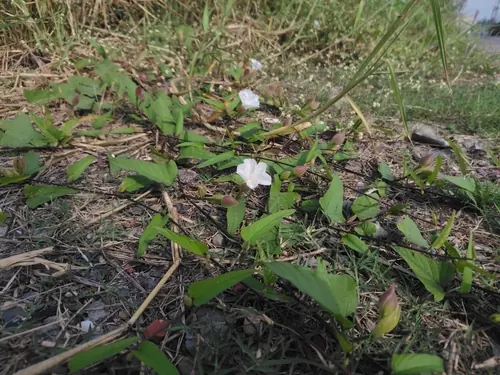
Historical purgative names do not define a safe preparation. This taxon’s underground part is presented here for safety documentation. A photograph alone cannot validate identification for consumption.
An illustration is not enough to identify a plant for consumption. Do not forage for a species based solely on this profile.
Uses & evidence
UNDERSTANDING THE USES
Properties & uses.
Why this plant appears in the guide
ANSM lists Ipomoea turpethum for the following part: underground parts. List B covers plants whose potential adverse effects outweigh the expected therapeutic benefit. Listing documents a tradition and a warning, not an indication to try.
The references do not establish a benefit. Lack of evidence is not assurance of safety.
Read the sourceThe traditional uses described are not clinical proof of effectiveness. Evidence for one preparation cannot automatically be applied to another.
Precautions before use
BEFORE ANY USE
Precautions & contraindications.
This guidance does not cover every individual situation. Missing information is not a guarantee of safety.
The following warnings do not constitute a complete review of interactions or contraindications. An unstudied combination cannot be considered compatible.
Contraindications & precautions
- Do not self-medicate with this List B herbal material. A historical indication is not equivalent to a medically assessed contraindication profile for every preparation.
Medicine interactions
- The reviewed references do not define a complete interaction profile. Do not add this plant to treatment on the assumption of compatibility; a pharmacist must assess it.
“Reported” does not prove causality; “possible” may reflect indirect evidence. “None reported” means none in the cited source, not that all combinations have been studied. Do not stop a prescribed treatment based on this profile.
Adverse effects
- The classification signals an unfavourable benefit–risk balance for the traditional use concerned. Specific effects and their frequency are not sufficiently characterised in the sources reviewed here.
Pregnancy & breastfeeding
No self-directed use during pregnancy or breastfeeding. The sources in this entry do not establish a safe formulation or dose for these situations.
Children & adolescents
No paediatric use is proposed. Keep this plant material and related products out of children’s reach; never taste the plant to identify it.
If symptoms persist, worsen or are unusual, consult a healthcare professional. In an emergency, contact the emergency services.
Sources & last review
CHECKING REFERENCES
Sources for this profile.
- ANSM — French Pharmacopoeia, List B, January 2026, page 13Accessed on 09/10/2026
- Kew POWO — Ipomoea turpethum (L.) R.Br.Accessed on 09/10/2026
Image: chiuluan · CC BY 4.0. View the original image and its licence. Image resized and converted to WebP.