Identity & origin
BOTANICAL IDENTITY
The right name is the first step.
The shared “eucalypti aetheroleum” monograph includes Eucalyptus polybractea R.T.Baker. This entry is limited to the parts and preparations described in it.
The shared monograph concerns an oil of defined quality, not infusions of these two species.
Also known as: No synonyms listed.
This entry does not reproduce the Eucalyptus globulus leaf monograph: another species does not constitute an equivalent herbal tea.
An illustration is not enough to identify a plant for consumption. Do not forage for a species based solely on this profile.
Uses & evidence
UNDERSTANDING THE USES
Properties & uses.
Cough associated with a cold and localized muscle pain
Use of the monographed group; the source does not demonstrate a benefit specific to each species.
Use considered plausible in a traditional-use monograph. That status alone does not demonstrate clinical efficacy.
Read the sourceThe traditional uses described are not clinical proof of effectiveness. Evidence for one preparation cannot automatically be applied to another.
Precautions before use
BEFORE ANY USE
Precautions & contraindications.
This guidance does not cover every individual situation. Missing information is not a guarantee of safety.
Contraindications & precautions
- Insufficient dataFull documentary reassessment is incomplete: the existing information is not a guarantee of no risk. Ask a pharmacist to check the preparation and medicines.
Medicine interactions
- Insufficient dataFull documentary reassessment is incomplete: the existing information is not a guarantee of no risk. Ask a pharmacist to check the preparation and medicines.
Other retained warnings · review incomplete
These existing warnings remain relevant to consult. Their exhaustive reassessment is outside this targeted review.
Restrictions and precautions
- Allergy to eucalyptus oil or 1,8-cineole.
- Contraindicated under 24 months and in children with a history of seizures.
Medicine interactions
- The selected data do not allow compatibility with your treatments to be guaranteed. Ask a pharmacist to check.
Pregnancy, breastfeeding and children
Pregnancy and breastfeeding: medicinal use is not recommended; insufficient data.
Inhaled and topical use is not recommended from age 2 to under 3; oral use is not recommended under 12. Ask a pharmacist to check the exact product.
“Reported” does not prove causality; “possible” may reflect indirect evidence. “None reported” means none in the cited source, not that all combinations have been studied. Do not stop a prescribed treatment based on this profile.
Adverse effects
- Allergic reactions, sometimes severe; contact eczema may occur.
Pregnancy & breastfeeding
Full documentary reassessment is incomplete: the existing information is not a guarantee of no risk. Ask a pharmacist to check the preparation and medicines.
Children & adolescents
Full documentary reassessment is incomplete: the existing information is not a guarantee of no risk. Ask a pharmacist to check the preparation and medicines.
If symptoms persist, worsen or are unusual, consult a healthcare professional. In an emergency, contact the emergency services.
Forms & how they are used
DOCUMENTED FORMS
One plant, several preparations.
Only forms documented in this profile’s sources are presented.
Preparation for inhalationEssential oil · Route: inhaled
Preparation described in the shared monograph.
Please note: Use a product intended for this route; beware of steam burns. Do not improvise concentrated mixtures.
Read the sourceTopical preparationEssential oil · Route: topical
Preparation described in the shared monograph.
Please note: Follow the leaflet; avoid broken or irritated skin and eye contact.
Read the sourceUnderstanding the plant’s actions
EXPLORE THE EVIDENCE
How does the plant act?
Eucalyptus polybractea is a possible source of the eucalyptus essential oil covered by the monograph. This profile therefore does not concern an infusion of its leaves. The assessment covers an oil of defined composition, not every distilled product simply bearing this botanical name.
Constituents to know.
Their presence and quantity depend on the plant part and preparation.
- 1,8-cineole
- Major constituent of the monographed oil. Research on this isolated molecule does not, on its own, demonstrate the efficacy of the whole oil.Read the reference
Respiratory and muscle comfort
The uses remain traditional, with distinct routes and preparations. Local application does not demonstrate systemic action.
Use considered plausible in a traditional-use monograph. That status alone does not demonstrate clinical efficacy.
Read the referenceWhat this means for preparation.
Look for the oil’s name, intended use and package leaflet. An oil for inhalation or application does not become a product for swallowing; no home ingestion is proposed.
Studies, findings & limitations
THE RESEARCH
What the research shows.
A laboratory or animal result alone does not demonstrate a benefit in humans. Each result must be read alongside the preparation studied and its limitations.
Isolated molecule or whole oil
The references do not establish a benefit. Lack of evidence is not assurance of safety.
- Type of research
- Clinical assessment by the EMA
- Preparation concerned
- Respiratory studies notably on 1,8-cineole, distinct from the complete essential oil.
- Observed results
- Some symptoms improved, but EMA could not draw a firm conclusion for the whole oil.
- Limitations to consider
- No separate benefit of this species is established by these data.
What can we take from this?
Fragrance and cineole content guarantee neither respiratory tolerability nor effectiveness. Paediatric restrictions and a history of seizures require specific vigilance.
Documentary review dated 09/10/2026. The references remain available to check the context.
Sources & last review
CHECKING REFERENCES
Sources for this profile.
- EMA — eucalypti aetheroleumAccessed on 09/10/2026
- EMA — Eucalypti aetheroleum, final revision 1 (20 November 2024)Accessed on 09/10/2026
- ANSES — synthèse juin2023, compléments alimentairesAccessed on 09/10/2026
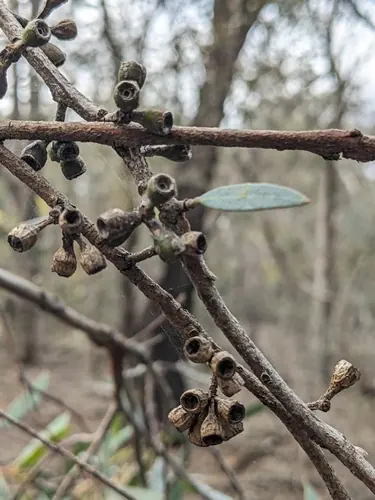
Image: Nina Kerr · CC BY 4.0. View the original image and its licence. Image resized and converted to WebP.