
Identity & origin
BOTANICAL IDENTITY
The right name is the first step.
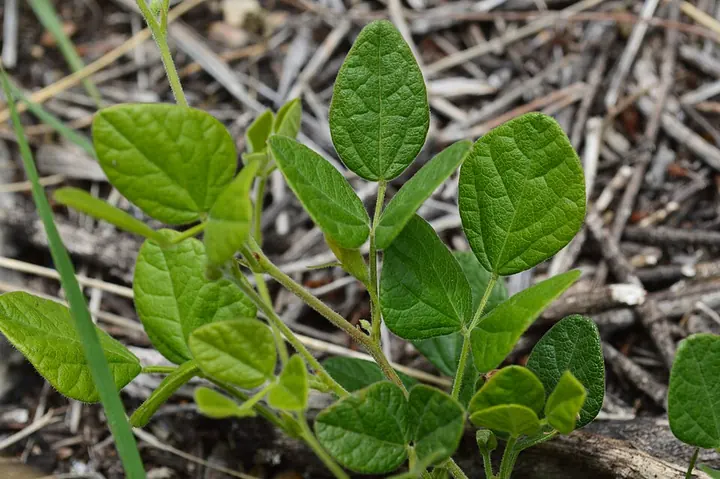
Desmodium molliculum is an accepted species in Plants of the World Online, in the Fabaceae family. Bussmann and Sharon’s survey documents it in northern Peru under the local names Pie de Perro, Pata de Perro, Chancas de Comida, Muña, Manayupa. Recorded material: fresh or dried whole plant. References include JULS41, RBU/PL268, GER135 and EHCHL109. Several local names coexist in the same row. Properties attributed to Desmodium adscendens must not be assigned to this species by analogy. This entry follows the botanical identity and context of the record; it is not an identification key for collecting plants.
Also known as: Hedysarum molliculum Kunth, Meibomia mollicula (Kunth) Kuntze, Desmodium adscendens var. caeruleum (Lindl.) DC., Desmodium mexicanum Sweet, Desmodium mexicanum S.Watson, Hedysarum adscendens var. caeruleum Lindl., Heteroloma lanatum Desv. ex Kunth, Pie de Perro, Pata de Perro, Chancas de Comida, Muña, Manayupa
Check the binomial Desmodium molliculum and the actual plant part. The local names Pie de Perro, Pata de Perro, Chancas de Comida, Muña, Manayupa alone do not guarantee botanical identity; properties of a related species cannot be transferred.
An illustration is not enough to identify a plant for consumption. Do not forage for a species based solely on this profile.
Uses & evidence
UNDERSTANDING THE USES
Properties & uses.
Uses reported in northern Peru
The whole plant is reported in a compound decoction for diarrhoea, stomach pain, gastritis and inflammation described as renal or gynaecological. A separate wash with Llantén and Matico is reported for wounds and scars. Neither diagnoses nor lesion outcomes are verified in this inventory. These reports establish neither a causal relationship nor clinical effectiveness. Described methods are ethnographic observations, without advice to prepare or take the plant.
Use reported in a survey or inventory. This establishes neither benefit nor safety.
Read the sourceThe traditional uses described are not clinical proof of effectiveness. Evidence for one preparation cannot automatically be applied to another.
Precautions before use
BEFORE ANY USE
Precautions & contraindications.
This guidance does not cover every individual situation. Missing information is not a guarantee of safety.
The following warnings do not constitute a complete review of interactions or contraindications. An unstudied combination cannot be considered compatible.
Contraindications & precautions
- The selected sources provide no complete clinical assessment of contraindications for this species. Their silence does not establish safety.
- Medical or pharmaceutical advice is required before medicinal use, particularly with a chronic condition or persistent symptoms.
Medicine interactions
- Interactions with medicines are not evaluated in the cited ethnobotanical survey. Ask a pharmacist to assess the exact species, plant part and product; do not discontinue prescribed treatment.
“Reported” does not prove causality; “possible” may reflect indirect evidence. “None reported” means none in the cited source, not that all combinations have been studied. Do not stop a prescribed treatment based on this profile.
Adverse effects
- The use inventory contains no monitoring that could establish the frequency or severity of adverse effects. No safe dose is inferred from the described practices.
Pregnancy & breastfeeding
Pregnancy and breastfeeding: the selected sources do not establish safety for this medicinal use. Do not self-medicate; seek appropriate professional advice.
Children & adolescents
Any uses reported in children validate neither safety nor a paediatric dose. Do not independently use this plant medicinally in children; consult a professional.
If symptoms persist, worsen or are unusual, consult a healthcare professional. In an emergency, contact the emergency services.
Sources & last review
CHECKING REFERENCES
Sources for this profile.
- Bussmann & Sharon (2006) — Additional file 1, p. 34, Desmodium molliculumAccessed on 09/10/2026
- Royal Botanic Gardens, Kew — Plants of the World Online: Desmodium molliculum (Kunth) DC.Accessed on 09/10/2026
- Bussmann & Sharon (2006) — Traditional medicinal plant use in Northern Peru: tracking two thousand years of healing cultureAccessed on 09/10/2026
Image: Roxana Sepúlveda · CC BY-SA 4.0. View the original image and its licence. Image resized and converted to WebP.