
Identity & origin
BOTANICAL IDENTITY
The right name is the first step.
Documentary profile devoted to ashwagandha, the part studied and the limits of knowledge.
Also known as: Indian ginseng
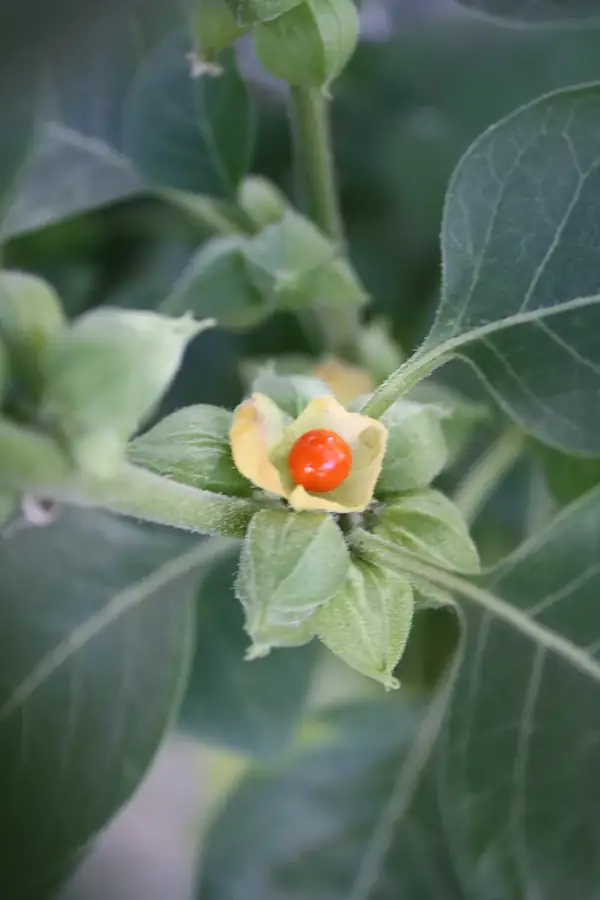
The botanical name and part used must match the profile; a photograph alone is not sufficient grounds for consuming a plant.
An illustration is not enough to identify a plant for consumption. Do not forage for a species based solely on this profile.
Uses & evidence
UNDERSTANDING THE USES
Properties & uses.
Stress and sleep
Small trials of varying preparations suggest possible benefit for stress and sleep. Anxiety findings remain uncertain; they do not establish every root preparation, tea or supplement as effective or safe.
A human study may be positive, negative or inconclusive. Read the findings, preparation and limitations.
Read the sourceThe traditional uses described are not clinical proof of effectiveness. Evidence for one preparation cannot automatically be applied to another.
Precautions before use
BEFORE ANY USE
Precautions & contraindications.
This guidance does not cover every individual situation. Missing information is not a guarantee of safety.
Contraindications & precautions
- PrecautionANSES advises against supplements in thyroid disorders, hyperandrogenism, liver or heart disease, or with sedative treatment. It could not establish a risk-free intake level.Source
- PrecautionNCCIH advises against use in autoimmune disease, before surgery or in hormone-sensitive prostate cancer.Source
Medicine interactions
- Possible interactionPossible interactions with diabetes medicines, antihypertensives, immunosuppressants, sedatives, anticonvulsants and thyroid hormones. Mechanisms and clinical importance are not established for every preparation or treatment.Source
- Possible interactionANSES also mentions antithyroid medicines and advises against combination with central nervous system depressants; caution with driving because of drowsiness.Source
“Reported” does not prove causality; “possible” may reflect indirect evidence. “None reported” means none in the cited source, not that all combinations have been studied. Do not stop a prescribed treatment based on this profile.
Adverse effects
- Drowsiness, digestive complaints; rare liver injury reported.
Pregnancy & breastfeeding
ANSES advises against supplements during pregnancy and breastfeeding; no safe dose can be proposed here.
SourceChildren & adolescents
ANSES advises against supplements below 18 years because data are insufficient.
SourceIf symptoms persist, worsen or are unusual, consult a healthcare professional. In an emergency, contact the emergency services.
Forms & how they are used
DOCUMENTED FORMS
One plant, several preparations.
Only forms documented in this profile’s sources are presented.
ExtractRoot / Root and leaf extracts · Route: oral
Products based on root, leaf or a combination.
Please note: No dose or recipe suggested; long-term safety unknown.
Read the sourceAvailable evidence
EXPLORE THE EVIDENCE
The available evidence.
Ashwagandha is studied in very diverse forms: root, leaf or extracts combining both. Some trials suggest a benefit for perceived stress and sleep, but they do not prove a general action against every form of anxiety. The word “adaptogen” alone describes neither an established mechanism nor a validated indication. The diversity of compositions and small samples make exact identification of the product studied essential.
Constituents to know.
Their presence and quantity depend on the plant part and preparation.
- Withanolides
- Group of bioactive compounds associated with experimental anti-inflammatory and antioxidant actions. Their presence does not demonstrate a universal clinical benefit.Read the reference
Stress and sleep
Some preparations may improve these parameters; the NCCIH distinguishes this signal from the still uncertain evidence on anxiety.
A human study may be positive, negative or inconclusive. Read the findings, preparation and limitations.
Read the referenceHormones and reproduction
Some research suggests changes in testosterone or sperm quality, but data remain limited and do not prove treatment of infertility.
The references do not establish a benefit. Lack of evidence is not assurance of safety.
Read the referenceLimitations to keep in mind.
Safety is part of product comparison: drowsiness and digestive disturbances are reported, along with rare liver injury. Thyroid treatments, sedatives, immunosuppressants, antidiabetics and antihypertensives warrant review.
Studies, findings & limitations
THE RESEARCH
What the research shows.
A laboratory or animal result alone does not demonstrate a benefit in humans. Each result must be read alongside the preparation studied and its limitations.
A human signal requiring clarification
A human study may be positive, negative or inconclusive. Read the findings, preparation and limitations.
- Type of research
- Official NCCIH summary of clinical trials.
- Preparation concerned
- Various Withania somnifera preparations, containing root alone, leaf or mixtures.
- Observed results
- Some work suggests a possible benefit for stress and insomnia.
- Limitations to consider
- Small samples, heterogeneous extracts and often short follow-up: no general conclusion on the efficacy of all supplements.
What can we take from this?
Long-term safety is insufficiently known. Pregnancy, breastfeeding, thyroid or autoimmune disease and planned surgery are situations in which the NCCIH advises against use. The results do not justify promises of sports performance, diabetes treatment or cognitive enhancement.
Documentary review dated 09/10/2026. The references remain available to check the context.
Sources & last review
CHECKING REFERENCES
Sources for this profile.
- EMA — Withaniae somniferae radix: dossier and documentsAccessed on 09/10/2026
- NCCIH — Ashwagandha: Usefulness and SafetyAccessed on 09/10/2026
- ANSES — Withania somnifera : avis 2021-SA-0077 du 19 avril 2024Accessed on 09/10/2026
Image: Wowbobwow12 · CC BY-SA 3.0. View the original image and its licence. Image resized and converted to WebP.