Identity & origin
BOTANICAL IDENTITY
The right name is the first step.
This profile concerns the resin (mastic). The uses described depend on the preparation.
Also known as: Mastic tree, Chios mastic
Resin, fruit oil and mastic tree essential oil are three different materials.
An illustration is not enough to identify a plant for consumption. Do not forage for a species based solely on this profile.
Uses & evidence
UNDERSTANDING THE USES
Properties & uses.
Digestion
Traditional use of mastic for mild digestive disorders.
Use considered plausible in a traditional-use monograph. That status alone does not demonstrate clinical efficacy.
Read the sourceMinor skin lesions
Traditional external use for minor inflammation and to support superficial wound healing.
Use considered plausible in a traditional-use monograph. That status alone does not demonstrate clinical efficacy.
Read the sourceThe traditional uses described are not clinical proof of effectiveness. Evidence for one preparation cannot automatically be applied to another.
Precautions before use
BEFORE ANY USE
Precautions & contraindications.
This guidance does not cover every individual situation. Missing information is not a guarantee of safety.
Contraindications & precautions
- Source-listed contraindicationKnown allergy to the preparation.Source
Medicine interactions
- No interaction reported in the sourceNo interactions reported in the monograph for these preparations; compatibility with every medicine is not established.Source
Other retained warnings · review incomplete
These existing warnings remain relevant to consult. Their exhaustive reassessment is outside this targeted review.
Restrictions and precautions
- Contraindication — Known allergy to the preparation.
Medicine interactions
- No interactions reported in the monograph for these preparations; compatibility with every medicine is not established.
Pregnancy, breastfeeding and children
Not recommended during pregnancy or breastfeeding: insufficient safety data.
Oral: adults. Cutaneous: from 12 for the specified preparations.
“Reported” does not prove causality; “possible” may reflect indirect evidence. “None reported” means none in the cited source, not that all combinations have been studied. Do not stop a prescribed treatment based on this profile.
Adverse effects
- Adverse effects insufficiently documented in the sources used here.
Pregnancy & breastfeeding
Not recommended during pregnancy or breastfeeding: insufficient safety data.
SourceChildren & adolescents
Oral: adults. Cutaneous: from 12 for the specified preparations.
SourceIf symptoms persist, worsen or are unusual, consult a healthcare professional. In an emergency, contact the emergency services.
Forms & how they are used
DOCUMENTED FORMS
One plant, several preparations.
Only forms documented in this profile’s sources are presented.
Resin powderResin (mastic) · Route: oral
Powdered resin in a defined preparation.
Please note: Follow the product's package leaflet; preparations are not interchangeable.
Read the sourceTopical preparationResin (mastic) · Route: topical
Semisolid form at a defined concentration.
Please note: No improvised application of raw resin.
Read the sourceUnderstanding the plant’s actions
EXPLORE THE EVIDENCE
How does the plant act?
Mastic tree is documented here through its resin, mastic, not its leaf or essential oil. EMA recognizes traditional digestive and topical uses. A human trial also studied a well-defined Chios mastic in functional dyspepsia. Its result is a specific signal: it does not turn all mastic tree preparations into treatments for gastric pain or a solution for eradicating Helicobacter pylori.
Mild dyspepsia
The resin has a traditional use for mild digestive complaints. An established digestive diagnosis in a trial cannot be reduced to any stomach ache.
Use considered plausible in a traditional-use monograph. That status alone does not demonstrate clinical efficacy.
Read the referenceDigestive symptoms studied
A controlled trial showed short-term symptomatic improvement with a particular resin. This provides human evidence without guaranteeing an effect for every product.
A human study may be positive, negative or inconclusive. Read the findings, preparation and limitations.
Read the referenceSkin
Traditional external use concerns local formulations for minor skin conditions; the digestive trial is not evidence for this use.
Use considered plausible in a traditional-use monograph. That status alone does not demonstrate clinical efficacy.
Read the referenceWhat this means for preparation.
Look for the words resin or mastic and its traceability. A study on the resin does not describe the action of a leaf herbal tea.
Studies, findings & limitations
THE RESEARCH
What the research shows.
A laboratory or animal result alone does not demonstrate a benefit in humans. Each result must be read alongside the preparation studied and its limitations.
A controlled trial of Chios mastic
A human study may be positive, negative or inconclusive. Read the findings, preparation and limitations.
- Type of research
- Randomized, double-blind, placebo-controlled trial: 148 participants meeting functional dyspepsia criteria, three weeks.
- Preparation concerned
- Resin of Pistacia lentiscus var. chia, taken orally.
- Observed results
- Improvement was reported in 77% of participants in the mastic group compared with 40% on placebo; symptom scores were also lower.
- Limitations to consider
- Short duration and defined preparation. The result does not prove ulcer prevention, eradication of a bacterium or efficacy of an essential oil.
What can we take from this?
An improvement in symptoms does not prove their cause has disappeared. Persistent pain, bleeding or weight loss require assessment independently of the choice of plant.
Documentary review dated 09/10/2026. The references remain available to check the context.
Sources & last review
CHECKING REFERENCES
Sources for this profile.
- EMA — Mastic: assessment and documentsAccessed on 09/10/2026
- EMA — reference document consultedAccessed on 09/10/2026
- Dabos et al., 2010 — Chios mastic in functional dyspepsia: a randomized double-blind trialAccessed on 09/10/2026
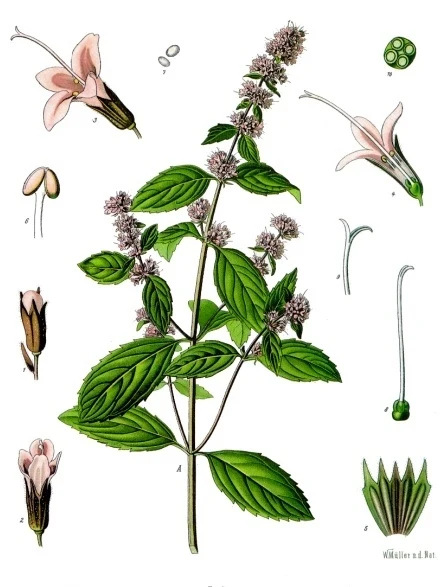
Image: Lumbar~commonswiki · CC BY-SA 3.0. View the original image and its licence. Image resized and converted to WebP.