
Identity & origin
BOTANICAL IDENTITY
The right name is the first step.
The European assessment did not allow a monograph to be established. It notably highlights toxicological uncertainties and conditions of use requiring supervision.
Also known as: dong quai
Do not confuse with Angelica archangelica: they are two distinct species.
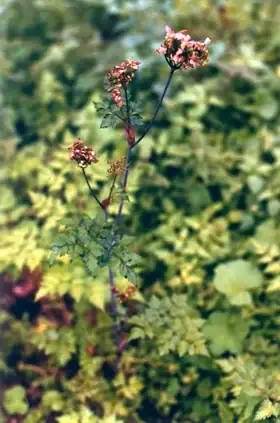
An illustration is not enough to identify a plant for consumption. Do not forage for a species based solely on this profile.
Uses & evidence
UNDERSTANDING THE USES
Properties & uses.
Inconclusive assessment
The criteria for efficacy, safety and duration of European use were not met.
The references do not establish a benefit. Lack of evidence is not assurance of safety.
Read the sourceThe traditional uses described are not clinical proof of effectiveness. Evidence for one preparation cannot automatically be applied to another.
Precautions before use
BEFORE ANY USE
Precautions & contraindications.
This guidance does not cover every individual situation. Missing information is not a guarantee of safety.
The following warnings do not constitute a complete review of interactions or contraindications. An unstudied combination cannot be considered compatible.
Contraindications & precautions
- Do not use in cases of known allergy to this plant.
Medicine interactions
- Interactions are not detailed here: have a pharmacist check treatments and the preparation.
“Reported” does not prove causality; “possible” may reflect indirect evidence. “None reported” means none in the cited source, not that all combinations have been studied. Do not stop a prescribed treatment based on this profile.
Adverse effects
- This entry does not provide an exhaustive list of adverse effects.
Pregnancy & breastfeeding
Pregnancy and breastfeeding: have the preparation checked; no self-medication is proposed here.
Children & adolescents
No pediatric use is proposed here; check with a professional.
If symptoms persist, worsen or are unusual, consult a healthcare professional. In an emergency, contact the emergency services.
Available evidence
EXPLORE THE EVIDENCE
The available evidence.
Dong quai is associated with Chinese gynecological traditions, but “regulating hormones” does not describe a demonstrated human effect. The report distinguishes experimental activities of certain constituents from inconclusive clinical research. Toxicological uncertainties and the lack of a sufficiently established European dossier explain the limited profile. This root must not be presented as a natural treatment interchangeable with hormone therapy.
Constituents to know.
Their presence and quantity depend on the plant part and preparation.
- Ferulic acid and phthalides
- These groups differ in their extraction and availability. Lipophilic phthalides, including ligustilide, are not equivalent to the components of an aqueous extract.Read the reference
Contractions and platelets: experimental research
Models investigate muscle relaxation or antiplatelet activity. They prove neither menstrual regulation nor a clinical antithrombotic effect.
Laboratory or animal observation. A human benefit cannot be inferred from this finding alone.
Read the referenceUnconfirmed estrogenic hypothesis
The report finds no consistent demonstration of oestrogenic activity of the root and its preparations.
The references do not establish a benefit. Lack of evidence is not assurance of safety.
Read the referenceLimitations to keep in mind.
The name “angelica” is not enough: Angelica sinensis and Angelica archangelica have different dossiers. Traditional use of a mixture does not validate this root on its own.
Studies, findings & limitations
THE RESEARCH
What the research shows.
A laboratory or animal result alone does not demonstrate a benefit in humans. Each result must be read alongside the preparation studied and its limitations.
Study in postmenopausal women
The references do not establish a benefit. Lack of evidence is not assurance of safety.
- Type of research
- Placebo-controlled comparative trial analyzed by the EMA.
- Preparation concerned
- Aqueous extract of Angelica sinensis, distinct from gynecological mixtures.
- Observed results
- No relevant difference between dong quai and placebo was found in the menopausal outcomes examined.
- Limitations to consider
- A separate observation, without placebo control and with unbalanced groups, does not resolve this uncertainty.
What can we take from this?
Potentially phototoxic or genotoxic constituents and their poorly characterised amounts prevent safety from being extrapolated. No unsupervised gynaecological use is suggested.
Documentary review dated 09/10/2026. The references remain available to check the context.
Sources & last review
CHECKING REFERENCES
Sources for this profile.
- EMA — Angelicae sinensis radix: official dossierAccessed on 09/10/2026
- EMA — monograph or public statement on Angelica sinensisAccessed on 09/10/2026
- EMA — assessment report on Angelica sinensis (Oliv.) Diels (Root)Accessed on 09/10/2026
Image: Anonymous Unknown author · CC BY-SA 3.0. View the original image and its licence. Image resized and converted to WebP.